There's a rap version of Strunk & White's The Elements of Style out there. Elements of Style is a mostly useless book with a lot of advice that's either inaccurate, banal, or flat-out wrong, but it doesn't deserve this.
Note: The guys who made this video are from Columbia, the same school that decided James Franco deserves an MFA.
Thursday, February 16, 2012

Tuesday, February 14, 2012
The Real Origin of Valentine's Day
If you're single (like me), I'm sure you have been subjected to any number of pitying stares or humblebragging comments regarding your plans, or lack therein, for Valentine's Day. Things like, "I'm so busy. I wish I could just sit in my room doing homework instead of going to The Olive Garden with my boyfriend," or, "Life must be so much simpler for you. You don't have to plan any romantic adventures for the person you want to spend your entire life with. I wish I could watch Doctor Who in my pajamas all day, too."

People who say things like this believe that they understand the purpose of Valentine's Day and are celebrating it correctly.
How wrong they are.
As anyone who has researched St. Valentine in any depth knows, the whole love angle was only a small part of his deal, and was in fact an accidental consequence of his life's true passion. I am referring, of course, to puppy catapulting.
Due to a debilitating allergy, St. Valentine was preternaturally afraid of cats and lived in fear that they would invade his castle. Lacking the resources to dredge a moat, Valentine employed an alternative defensive scheme. He erected a network of catapults along the castle's ramparts and stocked each one with a stable of spaniel, retriever, Labrador, and dachshund puppies.


Through an elaborate automation system, which inspired Henry Ford's design for the assembly line in his automotive factories, Valentine would launch preemptive puppies over the walls to keep the hordes of feline invaders at bay.

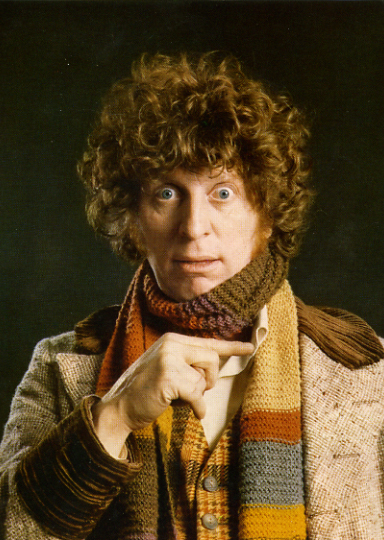
People who say things like this believe that they understand the purpose of Valentine's Day and are celebrating it correctly.
How wrong they are.
As anyone who has researched St. Valentine in any depth knows, the whole love angle was only a small part of his deal, and was in fact an accidental consequence of his life's true passion. I am referring, of course, to puppy catapulting.
Due to a debilitating allergy, St. Valentine was preternaturally afraid of cats and lived in fear that they would invade his castle. Lacking the resources to dredge a moat, Valentine employed an alternative defensive scheme. He erected a network of catapults along the castle's ramparts and stocked each one with a stable of spaniel, retriever, Labrador, and dachshund puppies.


Through an elaborate automation system, which inspired Henry Ford's design for the assembly line in his automotive factories, Valentine would launch preemptive puppies over the walls to keep the hordes of feline invaders at bay.

While most of these airborne puppies scampered away to romp in the fields after they touched down, one's unique journey inspired the holiday many of you will celebrate incorrectly today. As the story goes, one of Valentine's catapulted puppies veered off course, and instead of exploding an enclave of guerilla cats, it landed in the arms of a woman named Berenice. Berenice was sitting on her porch at the time, and was able to trace the arc of the puppy from its launching point at the castle.
Berenice misinterpreted the cuddly missile as a romantic overture, and went to Valentine's castle to accept his offer. Grateful that the woman was uninjured and therefore would not press charges, Valentine invited her and the puppy to come back to the castle for dinner that evening, and they all lived happily ever after.
So, while the rest of you are wining and dining your amorous partners, I'm going to assemble my catapult, make a quick trip to the animal shelter, and commemorate Valentine's Day the way it was meant to be celebrated.
Wednesday, November 23, 2011
Finding Inspiration on Twitter
A fun, Thanksgiving-themed hashtag showed up on Twitter tonight: #LiteraryTurducken. The concept is to take the titles of three different literary works and combine them into a single title. ("Turducken" is the turkey-chicken-duck combination that John Madden always talked about on Thanksgiving football games.) This leads to some bizarre, quite clever combinations: Charlie and the Chocolate War and Peace; The Unbearable Lightness of Being Gone with the Wind in the Willows; Tender is the Midsummer Night's Arabian Dream.
I came up with a few of my own that I'm fairly proud of: The Extremely Loud and Incredibly Close Restaurant on the Edge of the Invisible Cities; The Book Thief's Guide to the Life of Pi; Harry Potter and the Giver of Mice and Men; etc.
After I had exhausted the novel combinations that I could think of, my mind ran, as it usually does, to Star Trek, which led me to combining three episode titles into this: The Savage Curtain on the Edge of All Our Yesterdays.
That's probably the best #LiteraryTurducken I can come up with, but it might be more than that. I have to say, that sounds like a line from a poem I would like to read, maybe even one I would like to write. Who knows if I'll make time to write it, but the potential is there. And the inspiration for it came from "wasting time" playing around on Twitter.
I came up with a few of my own that I'm fairly proud of: The Extremely Loud and Incredibly Close Restaurant on the Edge of the Invisible Cities; The Book Thief's Guide to the Life of Pi; Harry Potter and the Giver of Mice and Men; etc.
After I had exhausted the novel combinations that I could think of, my mind ran, as it usually does, to Star Trek, which led me to combining three episode titles into this: The Savage Curtain on the Edge of All Our Yesterdays.
That's probably the best #LiteraryTurducken I can come up with, but it might be more than that. I have to say, that sounds like a line from a poem I would like to read, maybe even one I would like to write. Who knows if I'll make time to write it, but the potential is there. And the inspiration for it came from "wasting time" playing around on Twitter.
Monday, October 3, 2011
In Which an Author Gives Me His Chair
No, this isn't some high-handed metaphor (not yet, at least). Tonight, I went to a reading by Michael Martone, author of a bunch of books, including these:


The reading was in Bracken Library at Ball State University, and I got there kind of late, so the room was already standing-room-only. Actually, that's unusual by itself. Seating generally isn't a problem at events like this. Since all of the seats were filled, I took a spot against the wall, planning to stand and watch the reading from there. I was pretty close to the front and had a good view of the podium--not a bad vantage point at all.
After I had been standing there for a few minutes, this man--
 |
| This is Michael Martone, if you didn't know. |
--stood up and told me I could have his seat. Now, I had already sat in on a class Martone visited earlier in the day, so I knew what he looked like. Still, it took a second for me to register what was happening: The most important guy in the room--literally the reason everyone was there--was offering me his chair. It's not like he was getting up to read right at that moment, either. He sat down on the floor for around 10 minutes before it was time for him to read.
I half expected him to take off his bow tie (yes, he was wearing a genuine bow tie, which are cool, while we're on the subject) and start washing everyone's feet with it. You have to admit, the guy looks at least a little bit like middle-aged Jesus.
Since I'm a visual learner, I often don't get a lot out of readings, but Martone's personality and repartee made him memorable, even if I don't remember all of his stories (I use that term loosely) all that well. It didn't hurt that he's an Indiana writer and the crowd was primarily made up of Hoosiers, either.
And I got a story out of it myself, too.
Thursday, September 15, 2011
Taking Notes and Novel Reading
"I think someone said something about that somewhere in this book. No, I don't remember who, or when, or what page it's on. But I'm sure it's in there. Trust me, Prof."
Ever since I started college, and now, as I'm halfway through grad school, I have hated conversations like the one above. I have a somewhat obsessive attachment to my memory (from my high school Bible Quizzing days, but that's another story), and besides that, those kinds of conversations just don't make me sound like the budding brilliant intellectual I need my professors to know I am. That's not all grad school is about, of course, but it is part of it.
If you can't back up a statement with evidence, you might as well not even make it.
In order to save face and sound smart, I've developed a system for taking notes while I'm reading a novel that works pretty well for me.
While I'm reading a book, I have my computer open in front of me, and whenever I come across something I want to note (introduction of characters, important place names, themes, recurring images, etc.), I write a short entry like the ones you see in a screenshot. At the beginning of each line, I write the page number and a brief note about whatever I want to remember. I separate different notes from the same page with semicolons, because I like semicolons.
I don't write as many notes as I did when I started using this system, and I've gotten better at making them as short as possible the more I've done it. I started learning what kinds of triggers I needed to jog my memory, and then writing down only those keywords in my notes. The longer the notes you write, and the more of them you take down, the longer it takes to get through a book, and the higher your chances of not finishing the book on time and of going insane.
I use the Mac Pages program (instead of MS Word) because of its search function (Pages > Edit > Find > Show Search) that allows me to type in a word and see a list of every entry in the document where that word shows up (shown in the screenshot above). Clicking on an individual result takes you to that exact spot in the document. It's quite useful for finding/remembering patterns and motifs. I haven't found an equivalent function in Word. If I'm missing it, someone let me know, please.
Ever since I started college, and now, as I'm halfway through grad school, I have hated conversations like the one above. I have a somewhat obsessive attachment to my memory (from my high school Bible Quizzing days, but that's another story), and besides that, those kinds of conversations just don't make me sound like the budding brilliant intellectual I need my professors to know I am. That's not all grad school is about, of course, but it is part of it.
If you can't back up a statement with evidence, you might as well not even make it.
In order to save face and sound smart, I've developed a system for taking notes while I'm reading a novel that works pretty well for me.
 |
| A screenshot of my notes from Hari Kunzru's The Impressionist. |
While I'm reading a book, I have my computer open in front of me, and whenever I come across something I want to note (introduction of characters, important place names, themes, recurring images, etc.), I write a short entry like the ones you see in a screenshot. At the beginning of each line, I write the page number and a brief note about whatever I want to remember. I separate different notes from the same page with semicolons, because I like semicolons.
I don't write as many notes as I did when I started using this system, and I've gotten better at making them as short as possible the more I've done it. I started learning what kinds of triggers I needed to jog my memory, and then writing down only those keywords in my notes. The longer the notes you write, and the more of them you take down, the longer it takes to get through a book, and the higher your chances of not finishing the book on time and of going insane.
I use the Mac Pages program (instead of MS Word) because of its search function (Pages > Edit > Find > Show Search) that allows me to type in a word and see a list of every entry in the document where that word shows up (shown in the screenshot above). Clicking on an individual result takes you to that exact spot in the document. It's quite useful for finding/remembering patterns and motifs. I haven't found an equivalent function in Word. If I'm missing it, someone let me know, please.
Saturday, September 10, 2011
Ordinary Horror in Don't Come Back from the Moon
I have a theory about horror: bizarre things done in a
bizarre way aren’t horrific because they are too strange to be relatable, and
ordinary things done in an ordinary way aren’t horrific because they’re, well,
ordinary. Real horror comes when you combine the extremes. Bizarre things done
as if they’re ordinary. Ordinary things done in bizarre ways.
There are exceptions to this rule, of course (there are to
any rule), but I think it holds up pretty well. I recently encountered an
excellent illustration of my theory in a source where I was not expecting to
find it: Dean Bakopoulos’s novel-in-stories Please
Don’t Come Back from the Moon.
The premise sounds almost whimsical. In a depressed suburb
of Detroit, Maple Rock, fathers tell their families they are going to the moon,
and then disappear soon afterward. For these men, though, their trip to the
moon is not some grand adventure. In fact, the mystery of their disappearance remains
unsolved throughout much of the book; Bakopoulos’s slow, gradual, almost methodical
exploration of the lives of the families the absent fathers left behind is as
horrific as it is commonplace.
Please Don’t Come Back
from the Moon focuses on Michael, Nick, and Tom, three young men forced
into becoming men of the house long before they are mature enough to accept
that responsibility. Indeed, as Bakopoulos narrates their misadventures, it
becomes hard to envision them ever truly growing up.
For a while, I thought Please
Don’t Come Back from the Moon was going to be “just another” story about
boys becoming men despite the failures of their parents and communities. But
there’s much more to it than that.
(If you’ve stumbled upon this post without reading the book
first, I’m posting a SPOILER WARNING here.)
As Bakopoulos’s novel progressed, I realized that it was
going to end where it began, with a generation of fathers (the sons of the
fathers who vanished in the first story) also disappearing. And all of the
pedestrian, unremarkable events in between (teenagers drinking, a priest losing
his vocation, falling in love, working at a suburban mall) are the developments
that will lead those boys to consider abandoning their own wives and children
as they grow older.
In Please Don’t Come
Back from the Moon’s eponymous beginning story, the fathers’ bizarre
disappearance seems mysterious and unexplainable. By the time you reach the
final story, “Please Don’t Come Back from
the Moon (Reprise),” the
phenomenon of absent fathers feels not merely ordinary, but inescapable. That
graceful movement from bizarre otherness to ordinary recognition makes this one
of the more disquieting books I have read.
Monday, September 5, 2011
Vignette Novels: Mrs. Bridge and Sold
This week for #amlinking, we read Mrs. Bridge, Evan S. Connell's 1959 novel about India Bridge, a character he doesn't like or care about all that much, and the developments in her family over a period of several years. Instead of using the traditional chapter/scene format, Connell writes this novel as a series of vignettes (most are 1-2 pages, while the longest is around 5 pages long).
While I didn't care for the condescending stance Connell takes toward Mrs. Bridge--instead of feeling compassion for a woman whose world is crumbling around her, I felt prompted to point and laugh at her passive inability to take control of her life--the structure was fairly interesting. The main advantage an author can gain from using vignettes (or very short scenes) instead of longer scenes is that it forces the author to have a specific purpose for each section (usually just one purpose, though sometimes more), and to figure out how to express that purpose with as little extraneous detail as possible. Obviously, this can save an author from getting lost in a scene that meanders for a long time but doesn't really go anywhere.
A recent novel that uses a similar format is Sold, by Patricia McCormick, which tells the story of a young Nepalese girl, Lakshmi, who is sold into sexual slavery. Sold is told entirely from Lakshmi's first-person narrator point of view, whereas Mrs. Bridge employs an omniscient third-person narrator. McCormick uses this point of view to increase the pathos of the story--as readers, we can figure what is happening to Lakshmi long before she does--as well as to elliptically "look away" from some of the most painful moments in the story. (Since Sold was marketed as a young-adult novel, this strategy proves invaluable to keeping the story from becoming too graphic for its targeted audience.) Additionally, it gives a human, personal voice to what could otherwise become another "tragedy of poverty" story.
Another advantage of the brief scene format is that it allows the author to cover a long time frame in a minimum of pages. Mrs. Bridge covers the entire span of a life in fewer than 250 pages. This format can also give an author greater license to jump around and skip the boring/non essential parts and only focus on the highlights of the story with a minimum of scene-setting and exposition.
One drawback of vignette novels is that, because the story starts and stops so often, it can be difficult to keep readers motivated to continue reading; having to continually jump into one scene after another can be exhausting. This is similar to the problem "novels-in-short-stories" face, except that a single vignette often does not have a complete, self-contained story arc that a short story does.
While I didn't care for the condescending stance Connell takes toward Mrs. Bridge--instead of feeling compassion for a woman whose world is crumbling around her, I felt prompted to point and laugh at her passive inability to take control of her life--the structure was fairly interesting. The main advantage an author can gain from using vignettes (or very short scenes) instead of longer scenes is that it forces the author to have a specific purpose for each section (usually just one purpose, though sometimes more), and to figure out how to express that purpose with as little extraneous detail as possible. Obviously, this can save an author from getting lost in a scene that meanders for a long time but doesn't really go anywhere.
A recent novel that uses a similar format is Sold, by Patricia McCormick, which tells the story of a young Nepalese girl, Lakshmi, who is sold into sexual slavery. Sold is told entirely from Lakshmi's first-person narrator point of view, whereas Mrs. Bridge employs an omniscient third-person narrator. McCormick uses this point of view to increase the pathos of the story--as readers, we can figure what is happening to Lakshmi long before she does--as well as to elliptically "look away" from some of the most painful moments in the story. (Since Sold was marketed as a young-adult novel, this strategy proves invaluable to keeping the story from becoming too graphic for its targeted audience.) Additionally, it gives a human, personal voice to what could otherwise become another "tragedy of poverty" story.
Another advantage of the brief scene format is that it allows the author to cover a long time frame in a minimum of pages. Mrs. Bridge covers the entire span of a life in fewer than 250 pages. This format can also give an author greater license to jump around and skip the boring/non essential parts and only focus on the highlights of the story with a minimum of scene-setting and exposition.
One drawback of vignette novels is that, because the story starts and stops so often, it can be difficult to keep readers motivated to continue reading; having to continually jump into one scene after another can be exhausting. This is similar to the problem "novels-in-short-stories" face, except that a single vignette often does not have a complete, self-contained story arc that a short story does.
Subscribe to:
Posts (Atom)