Showing posts with label Writing. Show all posts

Saturday, June 23, 2012

The Marriage of Historical Fiction and Science Fiction


I have never been very interested in historical fiction. For a long time, I thought that was because my interests skewed more toward science fiction, and I thought those two genres were on opposite ends of the spectrum. Historical fiction, of course, deals with things that really happened, while science fiction deals with things that haven’t happened (yet, at least).

I recently finished reading Connie Willis’s novels Blackout and All Clear (both books tell a single story—it’s more accurate to call the work a two-volume novel, except no one writes those anymore). My experience with Willis’s books is making me rethink the historical fiction-science fiction binary.
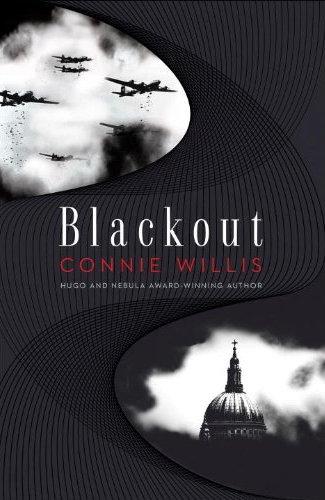
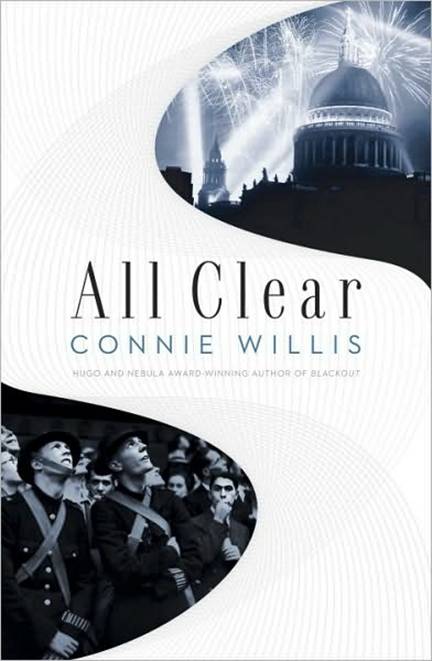


The setup of Blackout and All Clear is that historians at Oxford University in the year 2060 can use time travel to go back and see what life was really like back then. The plot follows three historians who are all studying different aspects of WWII England, especially Germany’s bombing of London. One of the jacket blurbs jokes that the level of period detail will make you think Willis had access to the time machines in the books, and I’m inclined to agree.

I recently graduated from Ball State University with a Master’s in Creative Writing, and one of my professors, Cathy Day, talked about the time and effort it takes to research historical fiction; she wrote about a the origins of her hometown’s circus in The Circus in Winter and is currently working on a novel about Cole Porter’s wife. 


Thinking about the amount of work Connie Willis must have done to get all the details just right in Blackout and All Clear boggles my mind.

The way that Willis evokes distinct time periods in the novels—1940s London and a futuristic Oxford—as well as combines these two genres, has made me realize that historical fiction and science fiction both do the work of world-building. That is, they attempt to flesh out and represent a world significantly different from the world in which the author lives.

The difference comes from how the author constructs those worlds. An author writing historical fiction is bound by how the world really was—the kinds of materials they used for clothes, when a given song was recorded, the dialect and jargon of the period—whereas an author writing science fiction is bound by the particulars of the world they envision—whether time travel is possible, if aliens have visited Earth, what kinds of technology have been invented. Both end up limiting the choices an author can make about the world they create, although the rules for each genre are different.

I’m currently working on a science fiction novel about a world in which a machine allows people to come back from the dead, and noticing the kinds of choices Day and Willis had to make when they wrote their historical stories is helping me to think through all of the little details that will build and define my fictional world. 

Saturday, April 28, 2012

Caitlin Horrocks and Omniscient Perspective

Now that I'm almost finished with my Master's degree, I finally have time to read book that I'm not required to read. The one I'm working through right now is This Is Not Your City by Caitlin Horrocks.


I first heard about Horrocks when she visited Ball State University (where I'm getting aforementioned degree), and she's an interesting author as well as an engaging speaker. During the visit, she talked about how some of her stories are the result of challenges or exercises she sets for herself. For example, the first story in the collection, "Zolaria," came from Horrocks deciding to write a story that went forward as well as backward in time.

That idea of stories as challenges stuck with me, and now as I'm reading This Is Not Your City, I'm trying to reverse engineer the finished stories back to the original challenge. I haven't figured out all of them in this way (and I don't think all of them had that kind of inspiration), but the story I read this afternoon seems to have a challenge behind it.

The story is "At The Zoo," which, as the title implies, is about a grandfather, mother, and son spending the day at a zoo. It's not an especially complicated story on the surface, but as I got further in to it, I noticed it was doing something unusual.

Most stories and novels (and even most other stories in Horrock's collection) these days are either written in first-person (an "I" narrator tells the story) or third-person limited omniscient (using "he, she, they," and only hearing the interior thoughts of one character in the story). People seem to think that getting in the head of more than one character is cheating or playing God or something, and it's generally discouraged.

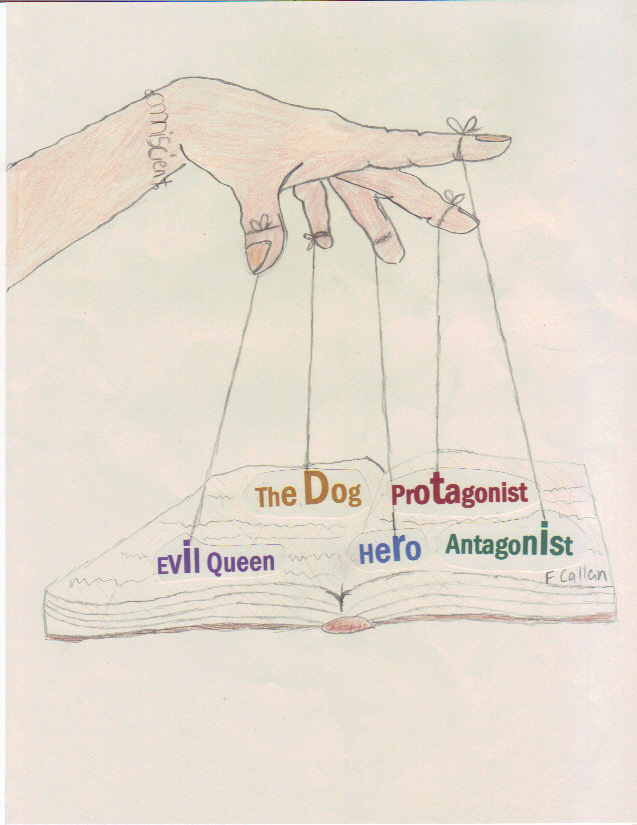
Picture from here. The bracelet around the wrist spells out "omniscient."

In "At The Zoo," however, Horrocks moves in and out of the heads of each of the three main characters. At one point, the mother, an attorney, thinks about the mad scientist who wants to patent his time travel machine; at another, the grandfather reminisces about life with his late wife; and we also hear the boy's thoughts about how the animals must be sad to be trapped in cages. Since the thought processes and ways to expressing themselves are quite different for each character, and since there are only three of them, it's easy to keep track of whose head we're in at any given moment (one pitfall of third-person omniscient is that it can be difficult to differentiate each character's thoughts). 

The challenge that I think Horrocks set for herself, then, was to write a story in third-person omniscient perspective. And she not only succeeded, but she wrote a "rule-breaking" story that is more effective and involving than it would have been had she written it from a more traditional perspective. 

Wednesday, April 25, 2012

Getting Published and Managing Expectations


Last week, I found out that my story, “The Sexton-Lily Intersection,” is going to be published in Oblong Magazine this August. This is fun and exciting and cool news, of course, but at the same time, I want to be realistic about what this “means” for me and my potential career as an author.


First, though, here’s the story of how I got to this position: I used Twitter. There’s a bit more to it than that, but not really all that much. I follow a bunch of writers and literary magazines on Twitter, and one of them mentioned this new magazine that was looking for stories. I checked out the website, and it turned out I had a story that seemed like it fit what they were looking for. So I submitted “The Sexton-Lily Intersection,” and a few days later (five, to be exact), they emailed me to say they wanted to publish it.

Now, a few reasons I’m trying to temper my excitement about my “big break”:

-My story will appear in the first issue of Oblong. Literary magazines trade on their reputation, and since Oblong hasn’t had time to build one yet, we don’t know how popular it will be or how many people will read it. Also, the best way to figure out what kind of magazine you’re looking at (and whether you would want one of your stories to appear in it) is to read what they have published, and I obviously didn’t have that option with Oblong; they mentioned several writers I like on their website, but that was really all I had to go on.

-Oblong is focused on only publishing a certain kind of story, flash fiction. Any genre can fit into the flash fiction form; it’s a form that is defined by length, not content. In the case of Oblong, they only want stories that are 1000 words long or shorter. Flash fiction is a growing market, especially on the internet--on sites such as Flash Fiction Online or SmokeLong Quarterly--  but it’s still one that isn’t very well known outside of English departments and literary journals.


-Oblong is based in England (the Brixton area of London, according to their site). I’m not sure how this will affect the availability of the magazine where I live (in Indiana), or if it will cost more to ship copies across the pond, for example. For all I know, it could open up an international market for me that I’m not even aware of yet.

So yeah, I’m not sure what getting this story published will mean in the long run, but I’m interested to see how it turns out and what I can learn from it. I’ll post updates here as the process moves along. 

Wednesday, November 23, 2011

Finding Inspiration on Twitter

A fun, Thanksgiving-themed hashtag showed up on Twitter tonight: #LiteraryTurducken. The concept is to take the titles of three different literary works and combine them into a single title. ("Turducken" is the turkey-chicken-duck combination that John Madden always talked about on Thanksgiving football games.) This leads to some bizarre, quite clever combinations: Charlie and the Chocolate War and Peace; The Unbearable Lightness of Being Gone with the Wind in the Willows; Tender is the Midsummer Night's Arabian Dream.

I came up with a few of my own that I'm fairly proud of: The Extremely Loud and Incredibly Close Restaurant on the Edge of the Invisible Cities; The Book Thief's Guide to the Life of Pi; Harry Potter and the Giver of Mice and Men; etc.

After I had exhausted the novel combinations that I could think of, my mind ran, as it usually does, to Star Trek, which led me to combining three episode titles into this: The Savage Curtain on the Edge of All Our Yesterdays.

That's probably the best #LiteraryTurducken I can come up with, but it might be more than that. I have to say, that sounds like a line from a poem I would like to read, maybe even one I would like to write. Who knows if I'll make time to write it, but the potential is there. And the inspiration for it came from "wasting time" playing around on Twitter.

Monday, October 3, 2011

In Which an Author Gives Me His Chair


No, this isn't some high-handed metaphor (not yet, at least). Tonight, I went to a reading by Michael Martone, author of a bunch of books, including these:


The reading was in Bracken Library at Ball State University, and I got there kind of late, so the room was already standing-room-only. Actually, that's unusual by itself. Seating generally isn't a problem at events like this. Since all of the seats were filled, I took a spot against the wall, planning to stand and watch the reading from there. I was pretty close to the front and had a good view of the podium--not a bad vantage point at all. 

After I had been standing there for a few minutes, this man--
This is Michael Martone, if you didn't know.

--stood up and told me I could have his seat. Now, I had already sat in on a class Martone visited earlier in the day, so I knew what he looked like. Still, it took a second for me to register what was happening: The most important guy in the room--literally the reason everyone was there--was offering me his chair. It's not like he was getting up to read right at that moment, either. He sat down on the floor for around 10 minutes before it was time for him to read. 

I half expected him to take off his bow tie (yes, he was wearing a genuine bow tie, which are cool, while we're on the subject) and start washing everyone's feet with it. You have to admit, the guy looks at least a little bit like middle-aged Jesus. 

Since I'm a visual learner, I often don't get a lot out of readings, but Martone's personality and repartee made him memorable, even if I don't remember all of his stories (I use that term loosely) all that well. It didn't hurt that he's an Indiana writer and the crowd was primarily made up of Hoosiers, either. 

And I got a story out of it myself, too. 

Thursday, September 1, 2011

The Fireworks Factory Plot

Itchy and Scratchy, the subjects of an embedded cartoon series on The Simpsons, are basically Tom & Jerry’s ultraviolent cousins. In the episode “The Itchy and Scratchy and Poochie Show,” Itchy and Scratchy’s ratings have been dwindling, so to resuscitate the show, they add a new character, Poochie, who is kind of like Goofy if Goofy had a surfboard, wore shades, and smoked weed.

In Poochie’s introductory episode, which you can watch here (sketchy YouTube version), Itchy and Scratchy are driving to a fireworks factory, where all kinds of explosive mayhem will surely ensue. Before they reach the factory, however, they meet their new friend Poochy, who introduces himself with a catchy rap song. At this point, the show cuts away from the cartoon to show Millhouse (and this part was cut out of the clip above), who voices the audience’s collective frustration, shouting, “When are they going to get to the fireworks factory?”

That is, the audience (of characters on The Simpsons) has come to expect a certain level of violence from Itchy and Scratchy, and the sign for the fireworks factory has whetted their appetites. Instead of delivering the payoff the audience expects, though, the cartoon is waylaid (or derailed) by the interpolation of Poochie.
This episode led to the concept of what I (and others) have called the “Fireworks Factory" plot, wherein the story is set up for an audience to expect a certain kind of payoff or resolution, but which is either absent or significantly delayed because the story goes in a different direction.
Is a writer’s job always to give readers exactly what they’re expecting? No. There can be good and valuable reasons for playing with an audience’s expectations. That isn’t quite what I’m talking about here, however. In a Fireworks Factory plot, all the story elements have been pointing toward a necessary and significant catharsis, which is then not delivered. Instead, the story goes off in an unforeseen direction that pushes aside the very scene readers have been eagerly waiting for.

Here are a few examples of Fireworks Factory plots:

Pretties, by Scott Westerfeld
Around 2/3 of the way through this YA science-fiction novel, the protagonist, Tally Youngblood, is on a journey to reunite with her friends, who have been absent for the entire novel. On the way, she is waylaid and ends up hanging out with a bunch of characters who are basically Ewoks. She stays with them for a rather long time.

Les Miserables, by Victor Hugo
There are probably several in this 1200+ page novel, but I’ll highlight two. Early in the book, there is a lengthy description of the Battle of Waterloo. It goes on for close to a hundred pages, the last two pages of which are relevant to the plot of Les Mis­. Later, during the climax of the story, when Jean Valjean is carrying the wounded Marius through the sewer, Hugo breaks off to give you an unbelievably detailed history of the Paris sewer system. Seriously, it goes on longer than the Waterloo part does.

The Tree of Life
This film, directed by Terrence Malick, seems to be a simple drama about a family dealing with tragedy. Around half an hour into the movie, Malick breaks away from the family story to depict the creation and history of the universe. I think it’s a brilliant move (it mirrors God’s responses to Job in the Biblical story of Job in order to show the turmoil the mother character experiences), but I have heard that a lot of people left the theater at this point, screaming, “When are they getting back to the family?” They do get back to the family, although it does take a while.

Golden Sun: Dark Dawn
In this RPG video game for the Nintendo DS, the story kicks off with the heroes accidentally damaging a flying contraption and then setting off on a quest for a part they need to repair it. At the end of the game, they still have not fixed the darned flying machine. I’m not making this up. You go through half the game trying to find the part to fix it, and then once you finally find it, you never get to fix the thing.

The time-travel season of Lost
Self-explanatory.

Again, having a Fireworks Factory sequence in a story isn’t automatically a bad thing. But it will disrupt the rhythm of the plots--might be want you're going for--and can potentially turn off readers--almost certainly not what you're going for--so if you’re going to do it, the payoff that results from the side-trip really needs to be worth it.