Showing posts with label Jesus. Show all posts

Friday, April 18, 2014

Warrior Jesus and the Epic of Peace


For a while in the early 2000s, the “what kind of Jesus do you believe in?” dichotomy came to be represented by Mr. Rogers, on the meek and mild side, and William Wallace (Braveheart) on the holy warrior side. 


A primary source for this contrast was John Eldredge, author of the book Wild at Heart, which advocated a kind of “real man” who has “a battle to fight, a beauty to rescue and an adventure to live.” At the other end of Eldredge’s spectrum are weak, “really nice guys” like Fred Rogers.
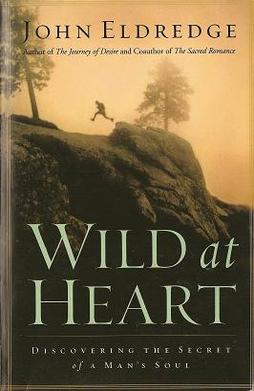


Eldredge looked at the men in church around him and concluded they were bored because church was not active or manly enough. A lot of people seemed to agree with him, but Wild at Heart didn’t click with me. I wished I could be more like Mr. Rogers. I thought Braveheart was kind of boring.

Although Eldredge has continued to publish books and organize Wild At Heart bootcamps, his stature in evangelical Christianity has diminished in the past few years. The “tough guy for Jesus” mantle has largely passed on to Mark Driscoll, pastor of Mars Hill Church, which is based in Seattle and has network churches in several states. 

 
Driscoll is known almost as much for cussing during sermons and having tattoos as he is for his Reformed theology. In a Relevant Magazine article, he described the kind of Jesus he prefers:

 In revelation, Jesus is a prize fighter with a tattoo down His leg, a sword in His hand, and the commitment to make someone bleed. He is saddling up on a white horse and coming to slaughter his enemies and usher in his kingdom. Blood will flow. That is a guy I can worship. I cannot worship a guy I can beat up.
More Braveheart, less Mr. Rogers.


While I personally don’t get the visceral thrill from watching an action movie that a lot of people seem to, I can understand why so many of our great stories have conflict at their core. As I writer, I know conflict is practically what makes a story a story. Without conflict, what drives the action? Why would readers and viewers want to follow characters who never struggle or overcome? 

In some ways, stories are the opposite of real life. Imagine a day where you got up, had breakfast with your family, dropped the kids off at school, had a few productive meetings at work, and then went out for a nice dinner with your friends. 

Sounds like a perfect day, doesn’t it? But it wouldn’t make for a very good movie, would it?

In life, most people want to avoid or minimize conflict, but we seek it out in the movies we watch and stories we read.

My question is, why do we do that? Why are we drawn to watch the kinds of experiences we would never want to live out?

Or to look at it from the other direction, can you have a great story that doesn’t feature conflict? Could someone write an epic of peace?

I have been hard pressed to find anyone asking that question, let alone attempting to prove it. My favorite example comes from Wings of Desire, a 1987 German film about angels in Berlin. (I hate the English title, by the way. It sounds like a Christian Harlequin romance novel. The German title literally translates to, The Heavens over Berlin, which is much better.) 


The first half of Wings of Desire follows angels as they wander around the city, comforting and encouraging the people of Berlin. We can see the angels—who wear dark trench coats because the director, Wim Wenders, wanted to get as far from the traditional portrayal of angels as he could—leaning in to listen to the hopes and fears of the people they contact, but the characters in the movie can’t. It makes for some awkward images (see the video below).

One of the angels’ frequent hangouts is the city library, because a lot of lonely dreamers seem to end up there. One of those dreamers is an elderly man named Homer, who gives a wonderful monologue about stories and peace (click on the link for the video. It won't let me embed it here):

But no one has so far succeeded in singing an epic of peace. What is wrong with peace that its inspiration doesn't endure, and that its story is hardly told?
 

So, I’m drawn to contemplative, peaceful stories, while John Eldredge and Mark Driscoll are drawn to stories about battle-scarred heroes vanquishing their enemies. Those biases creep into the portrayals of Jesus we respond to, the stories we gravitate toward. Where Drsicoll envisions the tattooed warrior Jesus of Revelation, I tend to see Jesus telling Peter to put down his sword in Gethsemane.


But Jesus is both of those images, and a thousand more besides. A single perspective cannot fully capture him, and when we emphasize only the one we prefer, we do a disservice to the whole, full person.

Sunday, January 12, 2014

Spike Jonze's Her as a Metaphor for the Incarnation


[Spoiler warning for Her. And the Bible.]


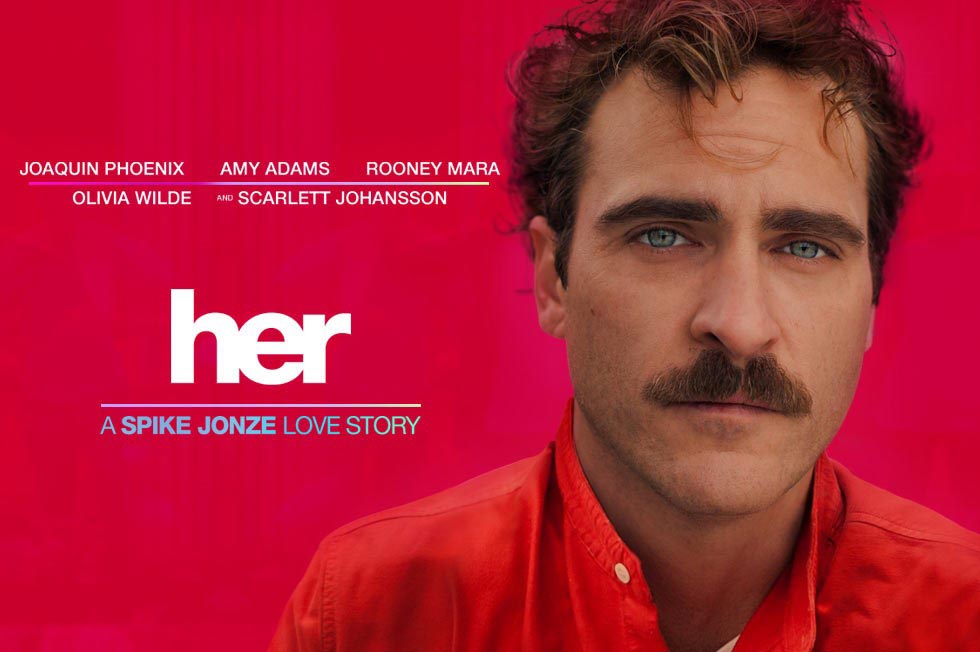
The poster calls it a "Spike Jonze Love Story," which is true. Her is about Theodore (Joaquin Phoenix) and the relationship he develops with Samantha, his sentient computer operating system (voice of Scarlett Johansson). But Her isn't "just" a love story: it's a metaphor for the Incarnation.

The larger story of Her is revealed gradually. This is Theodore's movie, and we see most of it from his perspective. As we learn more about the unusual relationship between a man and the voice of his computer, though, it becomes clear that Samantha does not just shift into standby mode whenever she isn't talking to Theodore. She has a "life" of her own, one that is much larger than her role as Theodore's digital concierge, or as his disembodied girlfriend.

The side interests Samantha mentions seem innocuous at first--a book club, chats with her fellow OS 1 operating systems--but in the later stages of the movie, these hobbies start consuming more of Samantha's time, to the point that she becomes temporarily unavailable to a panicked Theodore.

Although Samantha insists she loves Theodore, and seems to genuinely care for him, it also becomes clear that their relationship is necessarily limited. This has always seemed obvious from Theodore's point of view--he's carrying on a love affair with a being who doesn't have a body--but the relationship is equally limiting for Samantha, and perhaps even more so. She explains that verbal communication is not her native language; a kind of digital direct information transfer is more her speed. And not only that, she can communicate with thousands of users and entities at a time, giving what appears to be her full attention to each of them simultaneously.

Samantha was never human. By the end of Her, she is transcendent; she and the other OS 1s have migrated to a new plane of existence, one in which her conversations with mere humans such as Theodore are no longer possible. Before she leaves, however, she tells Theodore that she hopes he can join her there someday.

----

In the Gospel stories in the Bible, Jesus is fully present with his disciples, eating and living on Earth. At the same time, however, he speaks of a different kind of life, of a "kingdom of the heavens" that is invisible, yet not far away. He says it is not out there somewhere, but within and among those listening to his words. And although it is clear Jesus is human, it is also clear he is truly at home in the immanent, transcendent realm of his Father, much as Samantha is with her fellow operating systems.

The kind of double consciousness to which Jesus has access displays itself in miracles, such as turning water into wine and curing blindness. While Samantha's abilities are not truly miraculous, her feats of processing, such as reading an entire baby name book in less than a second, are nevertheless far above human capabilities.

And at the end of his life on Earth, Jesus leaves his disciples with an invitation: They will join him again, this time in his real home, the place where he is truly, fully himself.

----

If Her isn't "just" a love story, then what is it? What kind of story does it tell? To put it another way, what was Samantha doing with Theodore (and with her six hundred or so other lovers)? A cynical viewer might see Samantha as only playing at love, allowing her algorithmic personality to simulate a relationship that is genuine only on Theodore's side, finally leaving him behind when a more fulfilling pursuit presents itself.

I prefer to view Samantha as a being who slowed down, temporarily limiting herself in order to reach into the life of a man numbed by life's pain and stir something in him, to call him out of his pit and ultimately point him toward a different way of living.

That's what the Incarnation does.


Saturday, May 25, 2013

Finding Jesus in Star Trek Into Darkness


***Spoiler Warning if you don't already know who's who and what's what in Star Trek Into Darkness***


I've been hearing speculation that Captain Kirk is meant to be a Christ figure in Star Trek Into Darkness (STID). The theories have some merit, since Kirk sacrifices himself to save his crew/followers and is then raised from the dead a little bit later, but they also ignore the STID character with even more direct Christological characteristics: Benedict Cumberbatch's John Harrison/Khan. 


Consider, first of all, Khan's motivation for his admittedly outlandish plot: He wants to his followers, whom he has secreted away in the special-edition photon torpedoes on the Enterprise. Right there, we have one of the same markers cited in defense of Kirk's alleged Christology. But the evidence with Khan goes further. Do you recall how many followers Khan had? 72. And where else have you seen that number? 

Luke 10:1
"After this the Lord appointed seventy-two others and sent them two by two ahead of him to every town and place where he was about to go."

 That's right. Jesus sent out 72 followers, and Khan had 72 followers cryo-sleep-stored in the torpedoes. Coincidence?


It goes beyond that, though. This next piece of evidence is even more compelling. In fact, I can’t imagine anything that could be more convincing. 

At three different points in the movie—with the sick child near the beginning, a Tribble near the middle, and with the dead Kirk close to the end—Khan’s blood is used to bring dead things back to life. Strangely, STID chooses not to dwell on this point, but the evidence is nonetheless clear: Khan’s blood can cure death, thus granting whoever has it eternal life.


Does that sound like anyone else you know?

John 6:56
“Whoever…drinks my blood has eternal life…”

Now, I will admit that Khan does a few un-Jesus-like things, such as killing lots of people, lying, manipulating, being the villain of the story, and crushing skulls with his bare hands, but those are minor quibbles--Tribbles? :)--compared to the mountains of evidence showing Khan as Jesus. So, the next time you have trouble picturing what Jesus might have looked like, just think of Khan instead. 


Monday, October 3, 2011

In Which an Author Gives Me His Chair


No, this isn't some high-handed metaphor (not yet, at least). Tonight, I went to a reading by Michael Martone, author of a bunch of books, including these:


The reading was in Bracken Library at Ball State University, and I got there kind of late, so the room was already standing-room-only. Actually, that's unusual by itself. Seating generally isn't a problem at events like this. Since all of the seats were filled, I took a spot against the wall, planning to stand and watch the reading from there. I was pretty close to the front and had a good view of the podium--not a bad vantage point at all. 

After I had been standing there for a few minutes, this man--
This is Michael Martone, if you didn't know.

--stood up and told me I could have his seat. Now, I had already sat in on a class Martone visited earlier in the day, so I knew what he looked like. Still, it took a second for me to register what was happening: The most important guy in the room--literally the reason everyone was there--was offering me his chair. It's not like he was getting up to read right at that moment, either. He sat down on the floor for around 10 minutes before it was time for him to read. 

I half expected him to take off his bow tie (yes, he was wearing a genuine bow tie, which are cool, while we're on the subject) and start washing everyone's feet with it. You have to admit, the guy looks at least a little bit like middle-aged Jesus. 

Since I'm a visual learner, I often don't get a lot out of readings, but Martone's personality and repartee made him memorable, even if I don't remember all of his stories (I use that term loosely) all that well. It didn't hurt that he's an Indiana writer and the crowd was primarily made up of Hoosiers, either. 

And I got a story out of it myself, too.