Sunday, March 9, 2014

Leaning into Doubt: Worship Music, Praying Drunk, and The National

If I'm being honest, around 70% of church worship music sounds like this to me:


With "Jesus" replacing "Mickey" in the lyrics.

Oh Jesus, you're so fine, 
You're so fine you blow my mind
Hey, Jesus, Hey, Jesus

That doesn't necessarily mean they're bad songs or that they're poorly written--that's a separate issue--just that I don't connect to those songs the ways a lot of people seem to. Or that many churches would expect me to. 

I can get to the point where "Happy Jesus songs" make sense to me, but it doesn't happen very often, and it takes work to get me there. I'm not generally the happiest person, but I'm also not the biggest fan of people noticing my presence, so I'll sing along with songs I don't really feel (and might not even believe at the moment, since I'm being honest). 

It's easier for everyone that way. 

But the thing about the Bible, and Psalms (the original spiritual songbook) in particular, is that they are not just written with happy people in mind. There are happy songs, of course, but there are just as many "complaint" psalms, such as Psalm 142:


Psalm 142
New English Translation (NET)

A well-written song by David, when he was in the cave; a prayer.

1 To the Lord I cry out;
to the Lord I plead for mercy.
2 I pour out my lament before him;
I tell him about my troubles.
3 Even when my strength leaves me,
you watch my footsteps.
In the path where I walk
they have hidden a trap for me.
4 Look to the right and see!
No one cares about me.
I have nowhere to run;
no one is concerned about my life.
5 I cry out to you, O Lord;
I say, “You are my shelter,
my security in the land of the living.”
6 Listen to my cry for help,
for I am in serious trouble!
Rescue me from those who chase me,
for they are stronger than I am.
7 Free me from prison,
that I may give thanks to your name.
Because of me the godly will assemble,
for you will vindicate me.

But not many of today's worship hits sound like that, so when I'm looking for a "worship experience," I usually have to look elsewhere, in places you might not expect to find God at all. 

One of those places I find God is in poems by Andrew Hudgins, who has an uneasy and honest relationship with Christianity:

"I was raised as a Christian immersed in the Bible, and educated in a Methodist college. Several times, I’ve thought about applying to divinity school, though I never did it. I continue to see the world from a Christian ethical perspective, though now I add to it my own doubts about that perspective.

The spiritual issue, the issue of faith, is much more difficult for me, fluid, and painful. I am, I think, an instinctive believer, but I balk at the intellectual level. No matter how much I want to make the leap I can’t do it. Sometimes, though, when I don’t think about it, I find that I’m thinking not like a believer, but as a believer."

And even though I've never actually been drunk, my favorite Hudgins poem is "Praying Drunk." 


I’m sorry for the times I’ve driven   
home past a black, enormous, twilight ridge.
Crested with mist, it looked like a giant wave   
about to break and sweep across the valley,   
and in my loneliness and fear I’ve thought,   
O let it come and wash the whole world clean.
Forgive me. This is my favorite sin: despair—
whose love I celebrate with wine and prayer.
 ...
Dear Lord,   
we lurch from metaphor to metaphor,   
which is—let it be so—a form of praying.

As important and dear as words are to me, though, they can only go so far. Something about the commingling of words and chords is inherently spiritual, and the right song can reach me in ways a poem or a story cannot. 

When I'm looking for a "worship song," by which I mean a song that aligns me with an attitude of appreciation for God's presence and activity in my life, my go-to is the band The National. As far as I know, none of the members of the band go to church or even believe in God, but the way they engage with life resonates deeply with me. 

The National lean into doubt in a way that helps me to find myself again on the other side. 

All of my thoughts of you
Bullets through rock and through
Come apart at the seams
Now I know what dying means

I am not my rosy self
Left my roses on my shelf
Take the wild ones, they're my favorites
It's the side effects that save us


Friday, February 14, 2014

Friday Night Lights, Parenthood and the Clone Universe

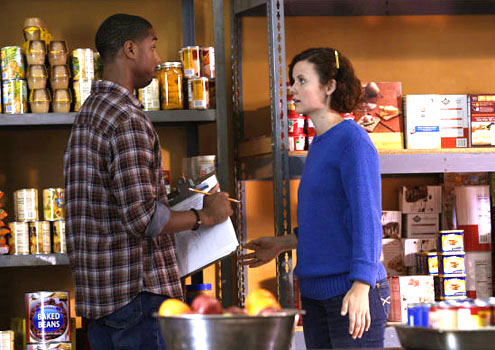
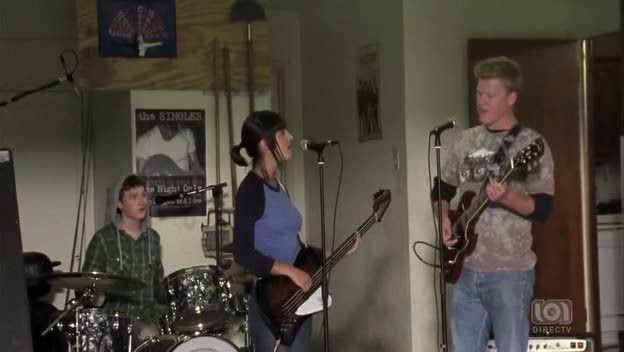
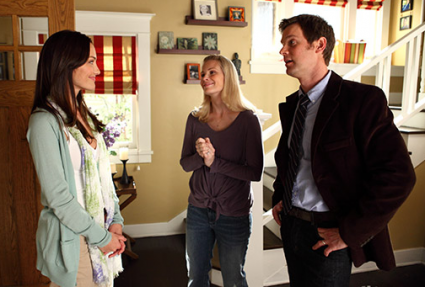
Since all of its primetime shows are on hiatus because of the Olympics, NBC is releasing webisodes for some of them (including Grimm, Parks and Recreation, and Parenthood). In the Parenthood webisode, "Friday Night at the Luncheonette,"Amber (Mae Whitman) struggles to control a recording session that she has booked and is recording on her own.

The premise seems ordinary and believable enough on the surface, but things are about to get really weird, because the band Amber has booked is Crucifictorious, the Christian metal band fronted by Landry Clarke on Friday Night Lights.


The incarnation of the band Landry brings to the Luncheonette has morphed into a folk-rock outfit, but the name is the same. What this means is that Parenthood and Friday Night Lights take place in the same fictional universe.

Remember when I said things would get weird? (It was two paragraphs ago.) Here's why. One of the lead characters on Friday Night Lights was Lila Garrity (Minka Kelly). A few years after FNL ended, Minka Kelly played Gaby, Max's behavioral therapist, on Parenthood.


It's not just her, either. Michael B. Jordan played quarterback Vince Howard on the last two seasons of FNL, and then had a recurring role as Alex, Haddie's boyfriend, on Parenthood.


And don't forget about Matt Lauria, who played Vince's teammate Luke Cafferty on FNL and Ryan, Amber's fiance, on Parenthood.


[Edit] an acquaintance on Facebook pointed out an even more blatant example: Derek Phillips played Billy Riggins on FNL (and in the Parenthood webisode), and also appeared on Parenthood as Billy Gardner, the best man at Crosby's wedding. Yet when Amber and Max, who were both at Crosby's wedding, see Billy Riggins at the Luncheonette, neither one recognizes him.

Remember: "Friday Night at the Luncheonette" clearly established that FNL and Parenthood exist in the same universe. How, then, can we explain the repeated paradox of two characters having the same body?

The answer is obvious, of course.

Cloning.

The only reasonable explanation for Lila/Gaby, Vince/Alex, Luke/Ryan, and Billy/Billy is that FNL and Parenthood are set in a world similar to that of Orphan Black, the BBC America show in which Tatiana Maslany plays multiple incarnations of a cloned woman. A few decades ago, for purposes yet unexplained, these inhabitants of the FNL/Parenthood universe were cloned, then transported to Texas and California, respectively.

It's too early to know if any of the clones will ever meet and/or attempt to eradicate the other in order to absorb their essence, but I think it's safe to say we will find out in season six of Parenthood.


Sunday, January 12, 2014

Spike Jonze's Her as a Metaphor for the Incarnation


[Spoiler warning for Her. And the Bible.]


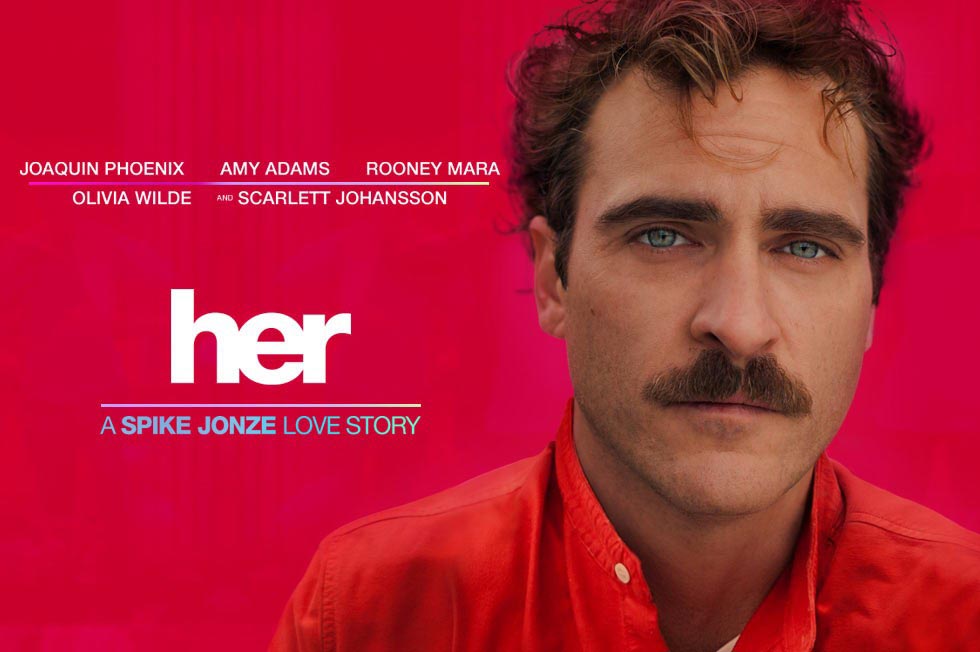
The poster calls it a "Spike Jonze Love Story," which is true. Her is about Theodore (Joaquin Phoenix) and the relationship he develops with Samantha, his sentient computer operating system (voice of Scarlett Johansson). But Her isn't "just" a love story: it's a metaphor for the Incarnation.

The larger story of Her is revealed gradually. This is Theodore's movie, and we see most of it from his perspective. As we learn more about the unusual relationship between a man and the voice of his computer, though, it becomes clear that Samantha does not just shift into standby mode whenever she isn't talking to Theodore. She has a "life" of her own, one that is much larger than her role as Theodore's digital concierge, or as his disembodied girlfriend.

The side interests Samantha mentions seem innocuous at first--a book club, chats with her fellow OS 1 operating systems--but in the later stages of the movie, these hobbies start consuming more of Samantha's time, to the point that she becomes temporarily unavailable to a panicked Theodore.

Although Samantha insists she loves Theodore, and seems to genuinely care for him, it also becomes clear that their relationship is necessarily limited. This has always seemed obvious from Theodore's point of view--he's carrying on a love affair with a being who doesn't have a body--but the relationship is equally limiting for Samantha, and perhaps even more so. She explains that verbal communication is not her native language; a kind of digital direct information transfer is more her speed. And not only that, she can communicate with thousands of users and entities at a time, giving what appears to be her full attention to each of them simultaneously.

Samantha was never human. By the end of Her, she is transcendent; she and the other OS 1s have migrated to a new plane of existence, one in which her conversations with mere humans such as Theodore are no longer possible. Before she leaves, however, she tells Theodore that she hopes he can join her there someday.

----

In the Gospel stories in the Bible, Jesus is fully present with his disciples, eating and living on Earth. At the same time, however, he speaks of a different kind of life, of a "kingdom of the heavens" that is invisible, yet not far away. He says it is not out there somewhere, but within and among those listening to his words. And although it is clear Jesus is human, it is also clear he is truly at home in the immanent, transcendent realm of his Father, much as Samantha is with her fellow operating systems.

The kind of double consciousness to which Jesus has access displays itself in miracles, such as turning water into wine and curing blindness. While Samantha's abilities are not truly miraculous, her feats of processing, such as reading an entire baby name book in less than a second, are nevertheless far above human capabilities.

And at the end of his life on Earth, Jesus leaves his disciples with an invitation: They will join him again, this time in his real home, the place where he is truly, fully himself.

----

If Her isn't "just" a love story, then what is it? What kind of story does it tell? To put it another way, what was Samantha doing with Theodore (and with her six hundred or so other lovers)? A cynical viewer might see Samantha as only playing at love, allowing her algorithmic personality to simulate a relationship that is genuine only on Theodore's side, finally leaving him behind when a more fulfilling pursuit presents itself.

I prefer to view Samantha as a being who slowed down, temporarily limiting herself in order to reach into the life of a man numbed by life's pain and stir something in him, to call him out of his pit and ultimately point him toward a different way of living.

That's what the Incarnation does.


Sunday, November 24, 2013

Retconning Doctor Who

[Spoilers throughout if you're not caught up with the Doctor.]


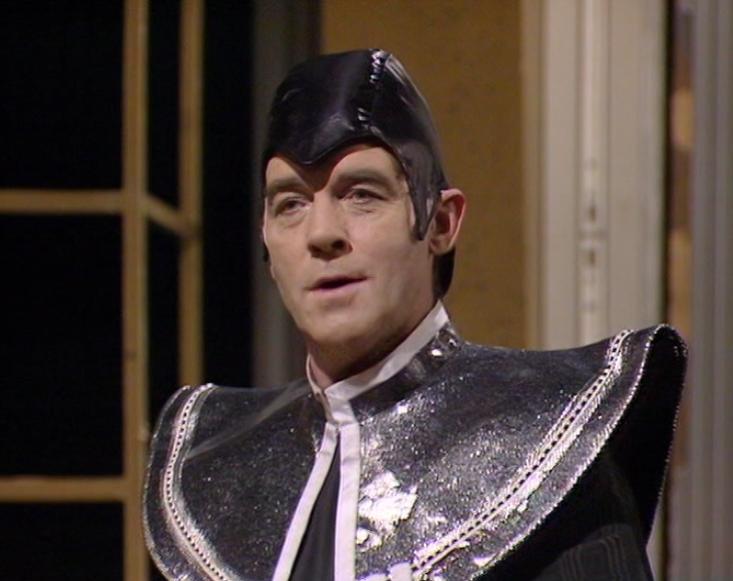
I'm wondering if all the Doctor Who 50th anniversary retconning gives a clue to what's coming up on the show. The 1986 season, "The Trial of a Time Lord," featured the Valeyard, a version of the Doctor who's supposed to come between the 12th and 13th incarnations and embody his darker impulses.


Now that John Hurt is enshrined as an official regeneration of the Doctor, that means all of the NuWho doctors were one number off: that is, Christopher Eccleston is the 10th Doctor, not the 9th; David Tennant is the 11th, not the 10th; and Matt Smith is the 12th, not the 11th.

Twelfth, not eleventh.
We already know Peter Capaldi is going to be the next Doctor (you can even see him in "The Day of The Doctor" if you pay close attention). We've assumed he would play the 12th Doctor, but the addition of Hurt means he would be the 13th (and theoretically final) incarnation of the Doctor. But what if all of that was misdirection? What if Capaldi is actually playing Doctor 12.5, the Valeyard?

12th? 13th? Somewhere in between?
Scroll back to that picture from the 80s: Capaldi has a similar look, and his menacing, intimidating persona (check him out as Malcom Tucker on In The Loop) would make him a natural for the Valeyard.

Tuesday, October 8, 2013

What Makes You Dutiful

Sorry, I can't sing, so you'll have to use your imagination to put the song with the words. Or, you know, record it yourself it you have that kind of free time.

Anyway, the song:


And my words for it:


[Verse 1]
You’re so secure
Know who you’re made for
Thoughts up above when you scrub down the floor
Don’t need make up
Won’t cover up
Your submission to Him is enough

[Bridge]
No one else in the room should see it
Your inner life is true

[Chorus]
Sister you please our Father like nobody else
The way you cover your head keeps me self-controlled
And when you clean out our room it ain’t hard to tell,
That you know,
Oh, oh,
Jesus makes you dutiful
Want the whole wide world to see
To understand God loves them so desperately
My kind words to you will make them believe
That you know,
Oh, oh,
Jesus makes you dutiful
Oh, oh,
He’s what makes you dutiful

[Verse 2]
Our ch-children know
I’m always right
You’ll submit to me
And the Lord’s our light
I know why
You’re being shy
Your only desire is for God’s eye-eye-eyes

[Bridge]
No one else in the room can see it
Your inner life is true

[All]
Sister you please our Father like nobody else
The way you cover your head keeps me self-controlled
And when you sweep out the room it ain’t hard to tell,
That you know,
Oh, oh,
Jesus makes you dutiful
Want the whole wide world to see
To understand God loves them so desperately
My kind words to you will make them believe
That you know,
Oh, oh,
Jesus makes you dutiful
Oh, oh,
He’s what makes you dutiful

Tuesday, October 1, 2013

I Don't Want to Write the Next Hunger Games

I don't want to write the next Hunger Games...


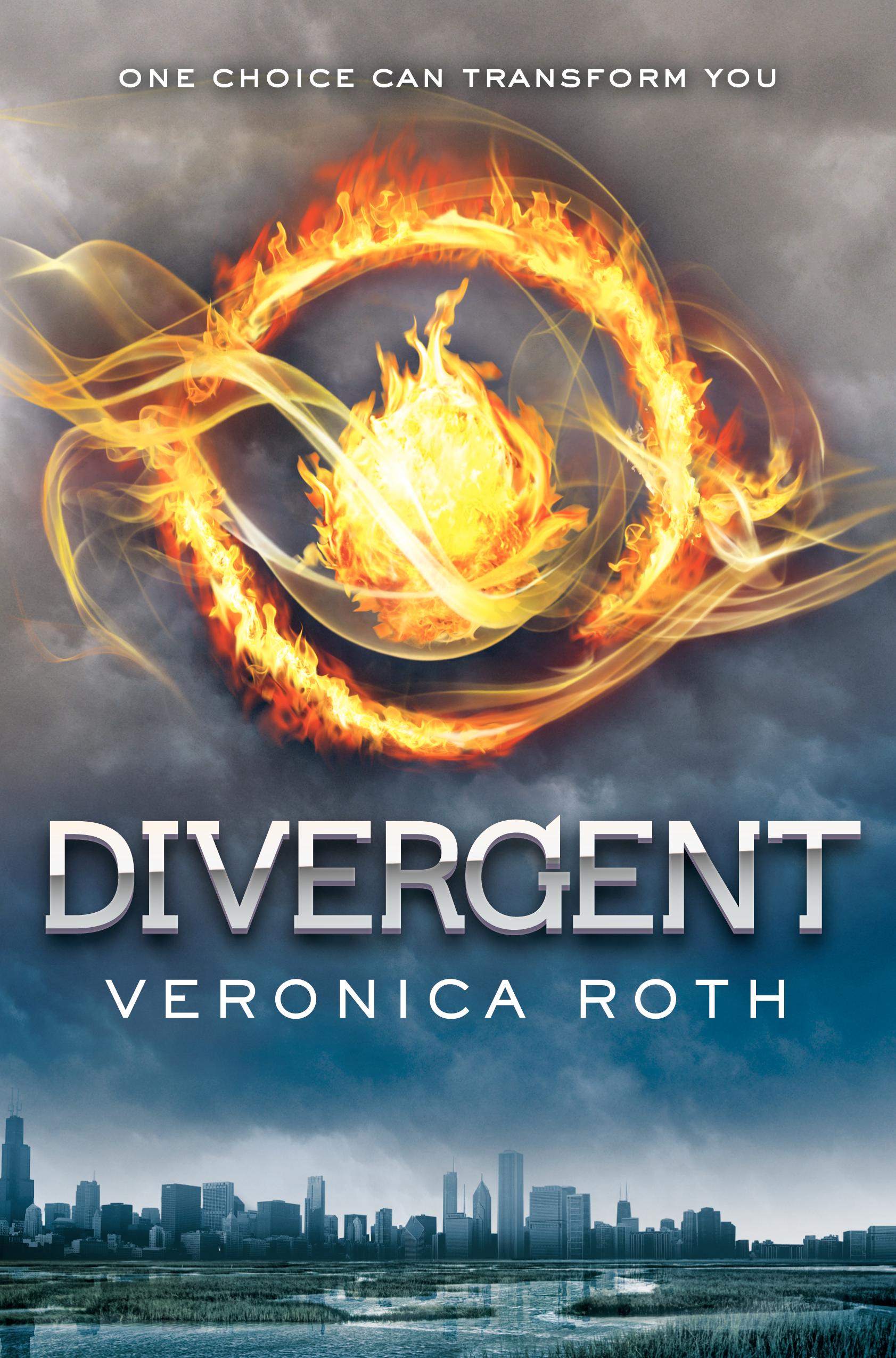
 ...or  Divergent...


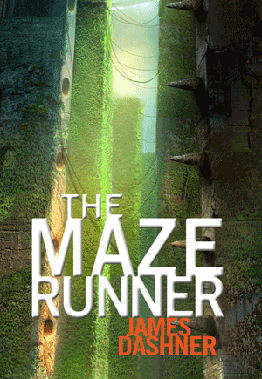
...or Maze Runner...


...or Knife of Never Letting Go...


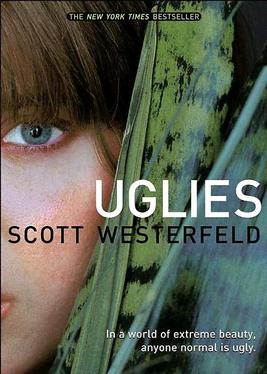
...or Uglies...


...or 5th Wave...


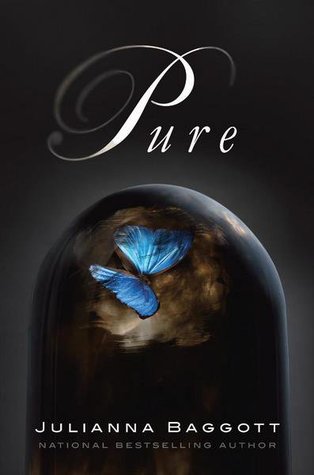
...Or even Pure (the best of this lot)...


Now, don't misunderstand me: I've read all of those books, and the series they kick off, and I enjoyed all of them. They're good books. That's not the issue.

Let's play a game. Try to figure out which book I'm summarizing:

Adrift in a world decimated by calamity and struggling to rebuild itself, our protagonist must plumb her untapped reservoirs of inner strength and determination as she faces unimaginable obstacles, as well as the inhumanity of the people around here, in her quest to reassemble the shattered mosaic of her past and uncover the dark secrets behind her world's dystopian state.

If you've read all 7 books, you know it's not The Maze Runner, The Knife of Never Letting Go, or The 5th Wave, because they have male protagonists, but other than that? It could fit any of the four remaining choices. And if English actually had a gender-neutral singular pronoun, I could have made it fit any and all of them.

Dystopian stories have their place on YA shelves. I'm not disputing that. But now that the hordes of Twilight knockoffs are finally slinking off to the remainder bin, it feels like dystopia occupies every spot in the entire section. It's what everyone is writing.

And I don't want to write the book everyone else is writing.

My native genre is science fiction, and I gravitate toward YA because I think it's the best genre for exploring how characters form and develop; I just don't want to invest my time and energy creating a world that doesn't work. I'm interested in places different from the scenes of my daily life, but that are also functional on a fundamental level.


The closest I've come to finding the kind of book I want to write is Lauren Oliver's Delirium series, which have a sinister edge to them (people can't feel emotions after they reach adolescence), but also have intact families, a reasonably stable government, relationships that aren't based solely on survival, and a rather low body count.

As much as I admire Lauren Oliver's writing, which really is excellent, her series falls into the "girl book" trope of the protagonist meeting the mysterious outsider and eventually falling in love with him. There's nothing wrong with that kind of plot, provided the girl is actually a character and not just a passive mush receptacle; but it's not the kind of book I want to write.

I want to write about guys.

Guys who aren't action heroes.

Guys who obsess over cartoons and play video games and spend more time scouring the internet for crazy theories than they do working out or getting a tan.

Guys like me, in other words.

So that's what I'm doing.

Sunday, September 1, 2013

My Tribute to Elmore Leonard


I'm a bit ashamed to admit I haven't read any of Elmore Leonard's novels, but I've watched several of the shows and movies that were adapted from his stories, and after I heard about his death a few weeks ago, I was drawn to learn more about him in a way I hadn't been before. In particular, I was intrigued by his essay, "Easy on the Adverbs, Exclamation Points and Especially Hooptedoodle," which is a list of the rules Leonard employed to "help me remain invisible when I'm writing a book, to help me show rather than tell what's taking place in the story."

Here's a condensed version of Leonard's rules:
  1.  Never open a book with weather.
  2.  Avoid prologues.
  3.  Never use a verb other than "said" to carry dialogue.
  4.  Never use an adverb to modify the verb "said."
  5.  Keep your exclamation points under control.
  6.  Never use the words "suddenly" or "all hell broke loose."
  7.  Use regional dialect, patois, sparingly.
  8.  Avoid detailed descriptions of characters.
  9.  Don't go into great detail describing places and things.
  10.  Try to leave out the part that readers tend to skip.

Good writing advice, to be sure. But no matter how carefully I might try to follow them, I'm sure I would mess up along the way. (I did in the previous sentence, for example.) So, instead of trying (and failing) to imitate Elmore Leonard's style, I decided to go in the opposite direction; to break as many of the rules as many times as I could in a single story.


Prologue

The clouds rolled in suddenly over the summer-scorched Kansas prairie the day Leonard gave me the most important advice of my life! He was a stoop-shouldered man, his formerly erect posture burdened by the unrelentingly inexorable march of the years. “Now, you gon’ listen up right and proper-like, y’hear?” Leonard declaimed, flecks of spittle hanging precariously from his bulbous lower lip.

“Yes’m, I’s listenin’,” I asseverated reverently!

~~~

Years after that day, when my son, a bald-headed ex-marine with a tattoo of his vociferously forgotten ex-wife on the backside of his left calf, who served one tour in Iraq and then another one immediately following the first, slammed the white-trimmed screen door I had carefully repainted just a month before, stripping off the old faded sky-blue paint before sanding it smoothly with the sandpaper I had purchased from the hardware store on the corner of Jay and Chamberlain, the one the arthritic old owner who searched you menacingly with his one good eye staunchly refused to sell to the big chain store no matter how encroachingly they presented the offer, all hell nearly broke loose! And I don’t mean the rain-signaling air with its precipitously lower pressure that the aforementioned door slamming unceremoniously let in.

“Dagnabbit! C’mon back now, Sonny!” I ejaculated after him imploringly, hoping my words might convince him to turn tail and come back in open-mindedly, ready to hear me out. “I ain’t toldja Leonard’s advice none yet!”

Miraculously, he suddenly stopped and turned tail to come back inside, just as I had asked him. He tremblingly grabbed the handle of the screen door and opened it up, the door swinging creakingly on its hinges, and walked back in, one step at a time. He crossed the room tentatively, his workbooted feet taking steps roughly two feet shorter than he typically strode, the scuffed soles rebounding harmlessly off the weather-worn wood floor, until he stood in front of the sofa. He sat down slowly, and I haltingly began to speak.

“Now, I knows this ain’t what you wantin’ to hear none right this now,” I pronounced gravely, “and I knows just as well as you knows things ain’t always been sunshine and dandylions twixt us’n, but I need ya t’ hear me out, Sonny. C’n ya do that fer me?”

Sonny nodded agreeably. “Yes’m, Pa. I reckon I can do that.”

I cleared my quickly to speak, not wanting to let this exceedingly rare moment between us pass. We didn’t often get moments like this, when Sonny’s temper didn’t make the veins appear bulgingly across his forehead, in a way that I was mostly sure kept his ears from hearing anything or anyone else might say to admonish him.

“Here’s what I gots to say t’ ya’,” Sonny. And you remember now, these’r them words Leonard imparted to me with his speaking mouth all them years ago,” I impelled hopefully. “’If it sounds like hooptedoodle, you best rewrite those words firing synaptically through your thinking brain afore all hell breaks loose!’”

Sonny nodded comprehendingly. “I understands, Pa. I for sure most definitely does!”