Monday, June 25, 2012

The Man From Primrose Lane (Sort-of Review)


NOTE: This post discusses, in general terms, aspects of The Man from Primrose Lane you should ideally not know before reading the novel.

A few years ago, I read Long for This World by Michael Byers. It’s about a doctor researching the fictional Hickman Syndrome, which causes cells to deteriorate, making those afflicted with the disorder age rapidly and die before they reach adulthood. During his research, the doctor discovers a remarkable boy whose cells don’t seem to deteriorate at all. This boy could be the key to curing Hickman, and potentially to stopping death itself.


Byers get to the border of some really interesting territory in the book—what if we could life forever?—but instead of exploring it, he stops. The remarkable boy dies, and life (and death) goes on as it always has.

I had selfish reasons for wanting Long for this World to go in a more fantastic direction—I’m writing a novel about a world where people don’t have to die—but I can understand why Byers cut off his plot where he did. If he had not, it would have pushed his novel onto the science fiction shelves, and since Byers teaches in the MFA program at the University of Michigan, he probably doesn’t want his name to end up there. (I don’t have time to go into it here, but genre writing and MFA programs usually don’t mix.)


I was reminded of Long for this World when I read The Man from Primrose Lane by James Renner (I first heard of Renner in the video below, where he explains the book publishing process using Star Wars figures). Renner’s book is about a true crime author’s search for a serial killer, which is, of course, a completely different plot than Long for this World.


The similarity is that Primrose Lane also comes to a point where is could either follow a more traditional story arc or take a turn toward “the genres” (Junot Diaz’s phrase), and where Long for this World stops, Primrose Lane leaps headfirst into crazytown. I don’t mean that as a insult; I rather enjoy leaps into crazytown.

The strange thing is, though, I felt somewhat cheated when I realized where Renner’s book was going. I thought I was reading a straightforward crime procedural, and ended up getting a time-travel saga that plays like a mashup of Primer and Timecrimes, both of which you should watch if you haven't already.


I imagine this is how a lot of people would have felt if Long for this World had followed its eternal life rabbit hole all the way through to its natural conclusion.

The reason for my reaction, I think, had to do with how my expectations had been groomed through the early sections of the book. You don’t find out what’s “really going on” until halfway through the book, by which time I had already decided what sort of book I thought I was reading. (Primrose Lane isn’t being marketed as a science fiction novel, even though it really is; the jacket copy calls it “genre-twisting,” but wisely doesn’t mention which genres it twists.)

I read enough books and watch enough movies that it’s hard to surprise me, so I’m usually grateful when it happens. But when I got to the big reveal in Primrose Lane, I was somehow disappointed to discover I was reading one of “those” books.

I kept going, though, and while I ended up liking Primrose Lane, I’m a little mad at myself for not liking it more than I did, since it really is the kind of book I want to write.


Saturday, June 23, 2012

The Marriage of Historical Fiction and Science Fiction


I have never been very interested in historical fiction. For a long time, I thought that was because my interests skewed more toward science fiction, and I thought those two genres were on opposite ends of the spectrum. Historical fiction, of course, deals with things that really happened, while science fiction deals with things that haven’t happened (yet, at least).

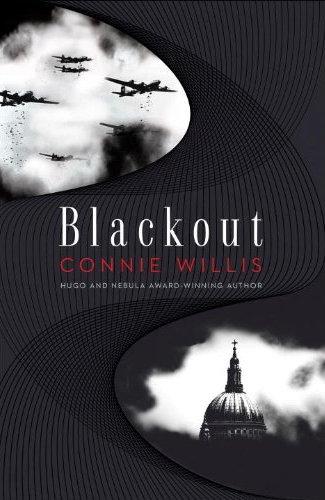
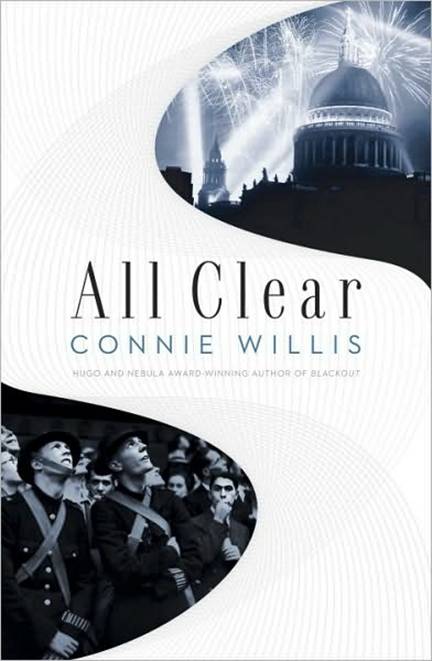
I recently finished reading Connie Willis’s novels Blackout and All Clear (both books tell a single story—it’s more accurate to call the work a two-volume novel, except no one writes those anymore). My experience with Willis’s books is making me rethink the historical fiction-science fiction binary.


The setup of Blackout and All Clear is that historians at Oxford University in the year 2060 can use time travel to go back and see what life was really like back then. The plot follows three historians who are all studying different aspects of WWII England, especially Germany’s bombing of London. One of the jacket blurbs jokes that the level of period detail will make you think Willis had access to the time machines in the books, and I’m inclined to agree.

I recently graduated from Ball State University with a Master’s in Creative Writing, and one of my professors, Cathy Day, talked about the time and effort it takes to research historical fiction; she wrote about a the origins of her hometown’s circus in The Circus in Winter and is currently working on a novel about Cole Porter’s wife. 


Thinking about the amount of work Connie Willis must have done to get all the details just right in Blackout and All Clear boggles my mind.

The way that Willis evokes distinct time periods in the novels—1940s London and a futuristic Oxford—as well as combines these two genres, has made me realize that historical fiction and science fiction both do the work of world-building. That is, they attempt to flesh out and represent a world significantly different from the world in which the author lives.

The difference comes from how the author constructs those worlds. An author writing historical fiction is bound by how the world really was—the kinds of materials they used for clothes, when a given song was recorded, the dialect and jargon of the period—whereas an author writing science fiction is bound by the particulars of the world they envision—whether time travel is possible, if aliens have visited Earth, what kinds of technology have been invented. Both end up limiting the choices an author can make about the world they create, although the rules for each genre are different.

I’m currently working on a science fiction novel about a world in which a machine allows people to come back from the dead, and noticing the kinds of choices Day and Willis had to make when they wrote their historical stories is helping me to think through all of the little details that will build and define my fictional world. 

Tuesday, June 12, 2012

Doctor Who - Davros's Chair


In part three of "The Genesis of the Daleks," you can clearly see the back of Davros's chair giving you the finger. 


Wednesday, May 30, 2012

The Les Miserables Movie Trailer

Here's the first trailer for the upcoming Les Miserables musical movie (the first time the musical has been adapted for the screen), which stars Hugh Jackman, Russell Crowe, Amanda Seyfried, Eddie Redmayne, Sacha Baron Cohen, Helena Bonham Carter, and Anne Hathaway. The movie is directed by Tom Hooper (The King's Speech).


Les Mis has a bunch of well-known songs--"One Day More," "Bring Him Home," "Do You Hear The People Sing?" "On My Own," "Master of the House,""Turning," Empty Chairs at Empty Tables," "Who Am I?" "I Dreamed a Dream," and others (there are nearly 50 musical numbers in all)--so it's intriguing that the trailer only uses one song ("I Dreamed a Dream"). And more than that, why choose that song?

(Spoilers follow, if you somehow don't know the plot of Les Mis already.)

While Fantine, who sings "I Dreamed a Dream," is an important character to the plot (Valjean adopting Cosette after her mother dies sets much of the story in motion), she dies less than a third of the way into the story. Besides that, while Hathaway is a star, she's hardly the biggest name in this cast; Jackman and Crowe are bigger stars, and they have much larger roles, too. 

I don't think Hathaway has a particularly impressive voice, either. Compare the trailer to this video of stage actress Lea Salonga singing the same song: 


So, why choose this song? I think the choice has relatively little to do with the Les Mis movie itself. Instead, they used "I Dreamed a Dream" because of another recent performance: 


That's right, "I Dreamed a Dream" is the song Susan Boyle sang in her first audition on Britain's Got Talent. It's probably a safe bet that more people know the song from there than from Les Mis, and if they hear it in the trailer, it will bring up memories of Boyle's performance and create an emotional connection many people don't have to a 3+ hour stage musical about the French Revolution.

It's a smart move from a marketing standpoint, even if it doesn't make the most sense in terms of the movie/musical itself. 

Friday, May 4, 2012

The Publishing Process: Explained with Star Wars Figures

James Renner, author of the novel The Man from Primrose Lane, which I haven't read but want to, explains the publishing world in the most logical, straightforward manner possible--with Star Wars figures. 


Saturday, April 28, 2012

Caitlin Horrocks and Omniscient Perspective

Now that I'm almost finished with my Master's degree, I finally have time to read book that I'm not required to read. The one I'm working through right now is This Is Not Your City by Caitlin Horrocks.


I first heard about Horrocks when she visited Ball State University (where I'm getting aforementioned degree), and she's an interesting author as well as an engaging speaker. During the visit, she talked about how some of her stories are the result of challenges or exercises she sets for herself. For example, the first story in the collection, "Zolaria," came from Horrocks deciding to write a story that went forward as well as backward in time.

That idea of stories as challenges stuck with me, and now as I'm reading This Is Not Your City, I'm trying to reverse engineer the finished stories back to the original challenge. I haven't figured out all of them in this way (and I don't think all of them had that kind of inspiration), but the story I read this afternoon seems to have a challenge behind it.

The story is "At The Zoo," which, as the title implies, is about a grandfather, mother, and son spending the day at a zoo. It's not an especially complicated story on the surface, but as I got further in to it, I noticed it was doing something unusual.

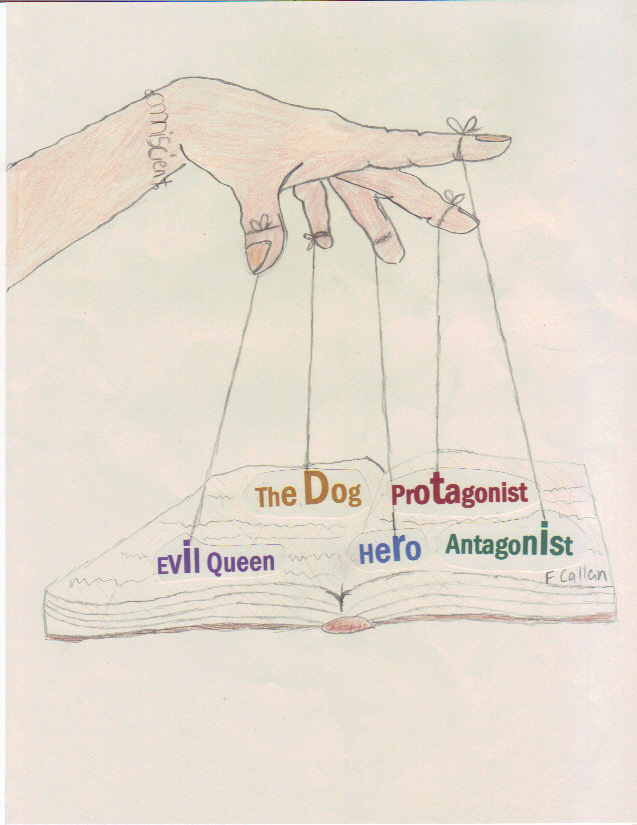
Most stories and novels (and even most other stories in Horrock's collection) these days are either written in first-person (an "I" narrator tells the story) or third-person limited omniscient (using "he, she, they," and only hearing the interior thoughts of one character in the story). People seem to think that getting in the head of more than one character is cheating or playing God or something, and it's generally discouraged.

Picture from here. The bracelet around the wrist spells out "omniscient."

In "At The Zoo," however, Horrocks moves in and out of the heads of each of the three main characters. At one point, the mother, an attorney, thinks about the mad scientist who wants to patent his time travel machine; at another, the grandfather reminisces about life with his late wife; and we also hear the boy's thoughts about how the animals must be sad to be trapped in cages. Since the thought processes and ways to expressing themselves are quite different for each character, and since there are only three of them, it's easy to keep track of whose head we're in at any given moment (one pitfall of third-person omniscient is that it can be difficult to differentiate each character's thoughts). 

The challenge that I think Horrocks set for herself, then, was to write a story in third-person omniscient perspective. And she not only succeeded, but she wrote a "rule-breaking" story that is more effective and involving than it would have been had she written it from a more traditional perspective. 

Wednesday, April 25, 2012

Getting Published and Managing Expectations


Last week, I found out that my story, “The Sexton-Lily Intersection,” is going to be published in Oblong Magazine this August. This is fun and exciting and cool news, of course, but at the same time, I want to be realistic about what this “means” for me and my potential career as an author.


First, though, here’s the story of how I got to this position: I used Twitter. There’s a bit more to it than that, but not really all that much. I follow a bunch of writers and literary magazines on Twitter, and one of them mentioned this new magazine that was looking for stories. I checked out the website, and it turned out I had a story that seemed like it fit what they were looking for. So I submitted “The Sexton-Lily Intersection,” and a few days later (five, to be exact), they emailed me to say they wanted to publish it.

Now, a few reasons I’m trying to temper my excitement about my “big break”:

-My story will appear in the first issue of Oblong. Literary magazines trade on their reputation, and since Oblong hasn’t had time to build one yet, we don’t know how popular it will be or how many people will read it. Also, the best way to figure out what kind of magazine you’re looking at (and whether you would want one of your stories to appear in it) is to read what they have published, and I obviously didn’t have that option with Oblong; they mentioned several writers I like on their website, but that was really all I had to go on.

-Oblong is focused on only publishing a certain kind of story, flash fiction. Any genre can fit into the flash fiction form; it’s a form that is defined by length, not content. In the case of Oblong, they only want stories that are 1000 words long or shorter. Flash fiction is a growing market, especially on the internet--on sites such as Flash Fiction Online or SmokeLong Quarterly--  but it’s still one that isn’t very well known outside of English departments and literary journals.


-Oblong is based in England (the Brixton area of London, according to their site). I’m not sure how this will affect the availability of the magazine where I live (in Indiana), or if it will cost more to ship copies across the pond, for example. For all I know, it could open up an international market for me that I’m not even aware of yet.

So yeah, I’m not sure what getting this story published will mean in the long run, but I’m interested to see how it turns out and what I can learn from it. I’ll post updates here as the process moves along.