Friday, February 22, 2013

Oscar Predictions

  I haven't done Oscar picks in a while (can't remember how long it's been, actually), but I have more free time right now--finishing grad school has that effect--so here goes. If for some reason you care, I'm listening to Macklemore & Ryan Lewis while I write this.

What I think will win is in Red.
What I think should win is in Blue.
If will and should are the same, it will be in Purple.
And because this is my list, the "should win" can be a write-in.

Best Picture:
"Beasts of the Southern Wild"
"Silver Linings Playbook"
"Zero Dark Thirty"
"Lincoln"
"Les Miserables"
"Life of Pi"
"Amour"
"Django Unchained"
"Argo" 
 Write-in: Moonrise Kingdom

I've seen every nominee except Amour, and I have issues with all of them. In fact, there are several additional movies besides MK--The Master, Looper, maybe even Cabin in the Woods--that I liked more than any of the nominees. My favorite of the nominees is Life of Pi, because it tried more things (there were a lot of safe movies this year), and was the most visually impressive.


Best Supporting Actor:
Christoph Waltz, "Django Unchained"
Philip Seymour Hoffman, "The Master"
Robert De Niro, "Silver Linings Playbook"
Alan Arkin, "Argo"
Tommy Lee Jones, "Lincoln"

 My preference is close between Waltz and Hoffman, because they're both great in roles that are familiar territory for them. I think the Academy is happy De Niro was good in something again.

Best Supporting Actress:
Sally Field, "Lincoln"
Anne Hathaway, "Les Miserables"
Jacki Weaver, "Silver Linings Playbook"
Helen Hunt, "The Sessions"
Amy Adams, "The Master" 

Hathaway is very good in Les Mis (I didn't like her "I Dreamed a Dream" the first time I heard it, but have come around since), but she's not in the movie all that much, and her character doesn't require a lot of range emotionally. Adams had a more challenging role in The Master--one I didn't think she would be able to pull off--but she impressed me in a big way.

Best Director: 
David O. Russell, "Silver Linings Playbook"
Ang Lee, "Life of Pi"
Steven Spielberg, "Lincoln"
Michael Haneke, "Amour"
Benh Zeitlin, "Beasts of the Southern Wild"
Write-in: Paul Thomas Anderson, "The Master"

Spielberg didn't do anything really new or difficult in Lincoln, which is why I think he will (but shouldn't) win. Anderson maintains a tightrope in The Master; it could have gone off the rails many times, but didn't (at least for me).

Best Actor:
Daniel Day-Lewis, "Lincoln"
Denzel Washington, "Flight"
Hugh Jackman, "Les Miserables"
Bradley Cooper, "Silver Linings Playbook"
Joaquin Phoenix, "The Master" 

Easiest category to predict. Day-Lewis is excellent as Lincoln, but for all the praise he gets for changing his voice and the way he carries his body, I think Phoenix did the same kinds of things in The Master, but better.

Best Actress:
Naomi Watts, "The Impossible"
Jessica Chastain, "Zero Dark Thirty"
Jennifer Lawrence, "Silver Linings Playbook"
Emmanuelle Riva, "Amour"
Quvenzhané Wallis, "Beasts of the Southern Wild" 

Might be the hardest category to predict. I haven't seen Watts or Riva, but I feel like this is Lawrence's coronation as the new queen of Hollywood. Sure, Wallis is super cute and really young, but she carried Beasts in a way that really impressed me.

Best Original Screenplay:
"Zero Dark Thirty"
"Django Unchained"
"Moonrise Kingdom"
"Amour"
"Flight"
Write-in: "Looper"

 I see this coming down to a showdown between two Oscar outsiders--Tarantino and Wes Anderson--and I'd be okay with either of them winning, honestly. Rian Johnson did some really interesting--and complex--things with the time-travel genre, and also built an emotionally-involving story at the same time.

Best Adapted Screenplay:
"Lincoln"
"Silver Linings Playbook"
"Argo"
"Life of Pi"
"Beasts of the Southern Wild"

Argo has become this year's juggernaut. I'm not a huge Lincoln fan, but the screenplay is quite good when it works (although kind of bad whenever Joseph Gordon-Levitt is on screen).

Best Animated Feature:
"Frankenweenie"
"The Pirates! Band of Misfits"
"Wreck-It Ralph"
"Paranorman"
"Brave"

Brave wins because it's not weird, and Pixar made it. I'm a video game kid, and Ralph gets it's world-building right; it might be the most fun I had at a movie this year.

Best Foreign Feature:
"Amour"
"A Royal Affair"
"Kon-Tiki"
"No"
"War Witch"

I live in a small town, so I have to wait until foreign movies get to DVD before I can see them, which means I haven't seen any of these yet. The foreign movie I'm most looking forward to, however, is Romania's "Beyond the Hills."

Best Visual Effects:
"Life of Pi"
"The Hobbit: An Unexpected Journey"
"The Avengers"
"Prometheus"
"Snow White and the Huntsman"

Avengers wins because everyone liked it and it's a special effects movie. As I mentioned before, I think Life of Pi is the best-looking movie of the year, and the effects are a big part of that.

Best Cinematography:
"Skyfall"
"Anna Karenina"
"Django Unchained"
"Life of Pi"
"Lincoln"
Write-in: "The Master"

Possible upset for Skyfall here, but I think Pi will win. The Master has a terrific balance of close-in and wide shots.

Best Costume Design:
"Anna Karenina"
"Les Miserables"
"Lincoln"
"Mirror Mirror"
"Snow White and the Huntsman"

Don't care enough about this category to have an opinion. I've only seen two nominees, too. This is the one place I would've like to see Cloud Atlas nominated, though.

Best Documentary Feature:
"Searching for Sugar Man"
"How to Survive a Plague"
"The Gatekeepers"
"5 Broken Cameras"
"The Invisible War"

 Sugar Man is the only one of the five I've seen, and I think it's great. Might not be "important" enough to win, though. The Gatekeepers is about Israeli military secrets, by the way.

Best Documentary Short:
"Open Heart"
"Inocente"
"Redemption"
"Kings Point"
"Mondays at Racine"

 Haven't ever heard of any of these. When in doubt, go with the most heartwarming-sounding title.

Best Film Editing:
"Lincoln"
"Silver Linings Playbook"
"Life of Pi"
"Argo"
"Zero Dark Thirty" 
 Write-in: The Cabin in the Woods

 ZDT's consolation prize.

Best Makeup and Hairstyling:
"Hitchcock"
"The Hobbit: An Unexpected Journey"
"Les Miserables" 

 Don't care, but glad Cloud Atlas didn't get nominated.

Best Music (Original Score):
"Anna Karenina"
"Argo"
"Life of Pi"
"Lincoln"
"Skyfall"
Write-in: "The Master" 

Would have liked to see Moonrise Kingdom in here, but it got disqualified because the Academy's rules don't make any sense. No one knows why The Master wasn't nominated. It might be the best thing in the movie.

Best Music (Original Song):
"Before My Time" from "Chasing Ice"
"Everybody Needs A Best Friend" from "Ted"
"Pi's Lullaby" from "Life of Pi"
"Skyfall" from "Skyfall"
"Suddenly" from "Les Misérables"

Haven't heard half of these. This category is another victim of weird Academy rules, which is why the worst song from Les Mis is the only one that could be nominated. 

Best Production Design:
"Anna Karenina"
"The Hobbit: An Unexpected Journey"
"Les Misérables"
"Life of Pi"
"Lincoln"

Haven't seen Anna yet, so I can't say it should win, but the concept for it sounds really interesting. 

Best Short Film, Animated:
"Adam and Dog"
"Fresh Guacamole"
"Head over Heels"
"Maggie Simpson in 'The Longest Daycare'"
"Paperman" 

Paperman wins because people have seen it (it played in front of Wreck-It Ralph). Check out Adam and Dog if you can; it's excellent. 

Best Short Film, Live Action:
"Asad"
"Buzkashi Boys"
"Curfew"
"Death of a Shadow (Dood van een Schaduw)"
"Henry"

Total shot in the dark.

Best Sound Editing:
"Argo"
"Django Unchained"
"Life of Pi"
"Skyfall"
"Zero Dark Thirty"

Best Sound Mixing:
"Argo"
"Les Misérables"
"Life of Pi"
"Lincoln"
"Skyfall"

I've never understood the difference between the two sound categories, and I don't believe anyone who says they do. 
 

Saturday, January 12, 2013

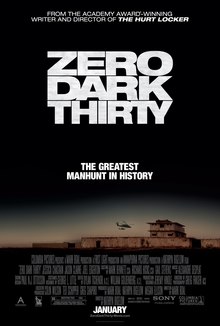
Bechdel Testing Zero Dark Thirty


Maya, the protagonist of Zero Dark Thirty, is so driven by her pursuit of "UBL" (Usama bin Laden), her career crowds out any time for a personal life. The structure of the film reinforces this attitude, giving us numerous shots of Maya working at her desk and hardly any of Maya in her off hours (if she even has any). This dedicated focus on her career makes Maya an unusual cinematic female character.


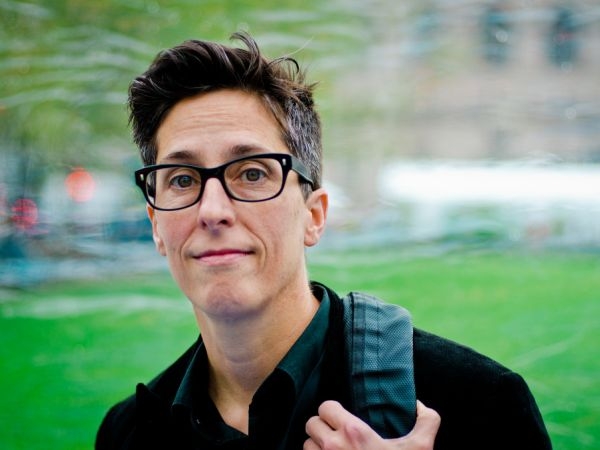
Way back in 1985 (the year after I was born), the writer Alison Bechdel noted the unfortunate trend of women in movies being defined by, and often existing only for, the men in (or not in) their lives, and developed the "Bechdel Test" as a way of evaluating the portrayals of women in movies. The test has only three steps:

(1) it has to have at least two women in it, who (2) who talk to each other, about (3) something besides a man.

 This doesn't seem like a particularly high bar, but many movies have failed the Bechdel Test, including the recent films Silver Linings Playbook, Anna Karenina, Django Unchained, The Avengers, and The Amazing Spider-Man.

(Note: The Bechdel Test isn't meant to comment on the quality of a given movie; excellent movies can fail it, and terrible ones can pass. It's mainly used to draw attention to a particular aspect of movies.)

So, how does Zero Dark Thirty (ZDT) fare? Perhaps surprisingly for a catch-the-terrorists-at-all-costs movie with a suspenseful action climax, it fares quite well on the Bechdel Test. It's perhaps worth noting that ZDT was directed by a woman, Kathryn Bigelow, although her previous film, The Hurt Locker, had barely any female characters at all, and the only one important to the story is defined almost exclusively by her relationship to the film's male protagonist.
Jessica (Ehle)

Maya (Chastain)


Most of the scenes in ZDT that satisfy the Bechdel requirements feature Maya (Jessica Chastain), and a character named Jessica, who is played by Jennifer Ehle. Both women are CIA analysts working to uncover the names and locations Al-Qaeda members, and rather than assessing the prospects for male companionship in their office, they spend most of their time discussing how to find and eliminate terrorists. They seem to have little time for anything else in their lives.

Interestingly, one conversation between Maya and Jessica does veer into the characters' personal lives, and it becomes like a bizarro Bechdel test. It's almost the only time personal lives come up in the entire movie (we later learn that Jessica is a mother), and in a further reversal of many movies, watching those two women talk about interrogation techniques and intelligence gathering is normal, while Jessica asking if Maya has a boyfriend feels strange and out of place, like I imagine two women discussing enhanced interrogation techniques might feel in a Nicholas Sparks novel.

Tuesday, December 25, 2012

Les Mis: Right and Left

A lot of the early reviews of Les Miserables I read mentioned the way Tom Hooper frames many of the songs: The actors appear in extreme close up, usually occupying the right side of the screen and leaving the left side empty. At first, it's a strange and seemingly arbitrary choice. Since I had read about it beforehand, I paid extra attention to the composition of those shots while I watched the movie this afternoon, and far from being arbitrary, there is a definite purpose to the right/left framing.

The singing-on-the-right becomes noticeable early on in the film, especially in Anne Hathaway's rendition of "I Dreamed a Dream." Through much of the song, she occupies the right half of the screen, and in addition to that, her face is turned to the left of the camera and her head is inclined upward, as if she's singing to someone just off-screen. This pattern and posture is repeating in Hugh Jackman's early song, as well as young Cosette's "Castle on a Cloud."

When Valjean (Jackman) visits Fantine in the hospital and promises to save her daughter, and later when he arrives to rescue Cosette from the Thenardiers, the framing changes: Fantine (and Cosette and the Thenardiers) are again on the right, looking left and up, while Valjean appears on the left of the screen, looking right and slightly down. Of course, one reason for this compositional change is because it balances the screen (the way most close-up conversations are shot in movies).

I think there's more to it, though. Fantine's "I Dreamed a Dream" is a prayer for someone, anyone to save her from what her life has become. Cosette's "Castle on a Cloud" serves the same thematic purpose. And in response to both of these songs, Valjean appears on the left side of the screen, as if he is arriving to answer the women's prayers.

Once I noticed that right/left pattern, I started looking for it in Les Mis's subsequent songs. There are many more right-side-prayers than left-side-answers throughout much of the film, but the pattern remained consistent. It becomes even more noticeable in the final act songs, as many of the characters' prayers are finally answered.

I'll point out what I think are the two most important examples. (Spoiler warning if you somehow don't already know what happens at the end of Les Miserables.)

When Valjean tells Marius that he has to run away so that Marius and Cosette can be safe together, freed from the ghosts of Valjean's past, he is on the right side of the screen, and Marius is on the left, listening. A crucifix is visible in the background of the room, as if Valjean is the penitent seeking forgiveness, and Marius the priest offering absolution.

When the Thenardiers crash Marius and Cosette's wedding, Marius starts to throw the dastardly pair out, but before he can, they reveal a secret: Valjean was the man who rescued Marius on the night the barricades fell. It's the answer to a prayer Marius has been praying since he awoke and sang "Empty Chairs at Empty Tables." During this conversation, Marius is on the right of the screen, asking questions; the Thenardiers are on the left, providing answers.

In the finale, several characters harmonize on these lines:

"And remember
The truth that once was spoken:
To love another person is to see the face of god"

This idea is at the center of Les Miserables, and it's one that the right/prayers-left/answers framing reinforces throughout the film.

Monday, December 24, 2012

Les Miserables - "Confrontation"

The "confrontation" scene in the Les Mis movie is a little different than the stage version.

Tuesday, December 4, 2012

The Frame concept art


Today on Facebook, Jamin Winans posted this artwork from his upcoming movie The Frame: 


Monday, October 22, 2012

Reading Cloud Atlas Chronologically


I finished re-reading Cloud Atlas this afternoon.  This time, instead of reading the book 
straight through, I read both parts of each story before moving on to the next one. Cloud Atlas is divided into six separate stories, and each story is divided into two halves. The structure of the book looks like this: 

 
Adam = “The Journals of Adam Ewing”
Zed. = “Letters from Zedelghem”
Luisa = “Half-Lives: The First Luisa Rey Mystery”
Tim = “The Ghastly Ordeal of Timothy Cavendish”
Sonmi = “An Orison of Sonmi-451”
Sloosha’s = “Sloosha’s Crossin’ an’ Everythin’ After”

You end up moving forward in time, from Adam to Sloosha’s, and then back in time from Sloosha’s to Adam again. Thus, while Sloosha’s is the chronological end of Cloud Atlas, it occupies the center point or fulcrum of the book itself.

The fancy word for a structure like this is a chiasm. It’s an unusual way to tell a story, but Mitchell gets a lot of mileage out of it by having a character in one story discover the previous/next story in the sequence. For example, Robert Frobisher, the protagonist in “Letters from Zedelghem,” finds the first half of “The Journals of Adam Ewing” (i.e. the part of the book you have just read) in the house where he’s staying; and in “Half-Lives: The First Luisa Rey Mystery,” Luisa finds a pack of Frobisher’s letters in her story.

As intriguing as the nested-stories conceit is, it does have a serious downside: If you read the book straight through, as I did on my first read, there will be a lot of time between finishing the first half of “The Journals of Adam Ewing” or “Letters from Zedelghem” and starting the second half. I basically didn’t remember who Adam Ewing is or what his deal was when I got to the end of the Cloud Atlas.

When I read through the novel chronologically (all of “Adam,” then all of “Zedelghem,” then all of “Luisa,” etc.), I appreciated each story as an individual story more, because I still had the beginning in my head when I got to the end. At the same time, though, I think I lost some appreciation (or at least awareness) of how the stories overlap and interconnect.

I do think, though, that the reincarnation/repetition theme is one of the weaker parts of Cloud Atlas. And judging by the trailers, that seems to have become one of the dominant themes in the movie.